Introduction: The Expanding Theater of Domain Threats
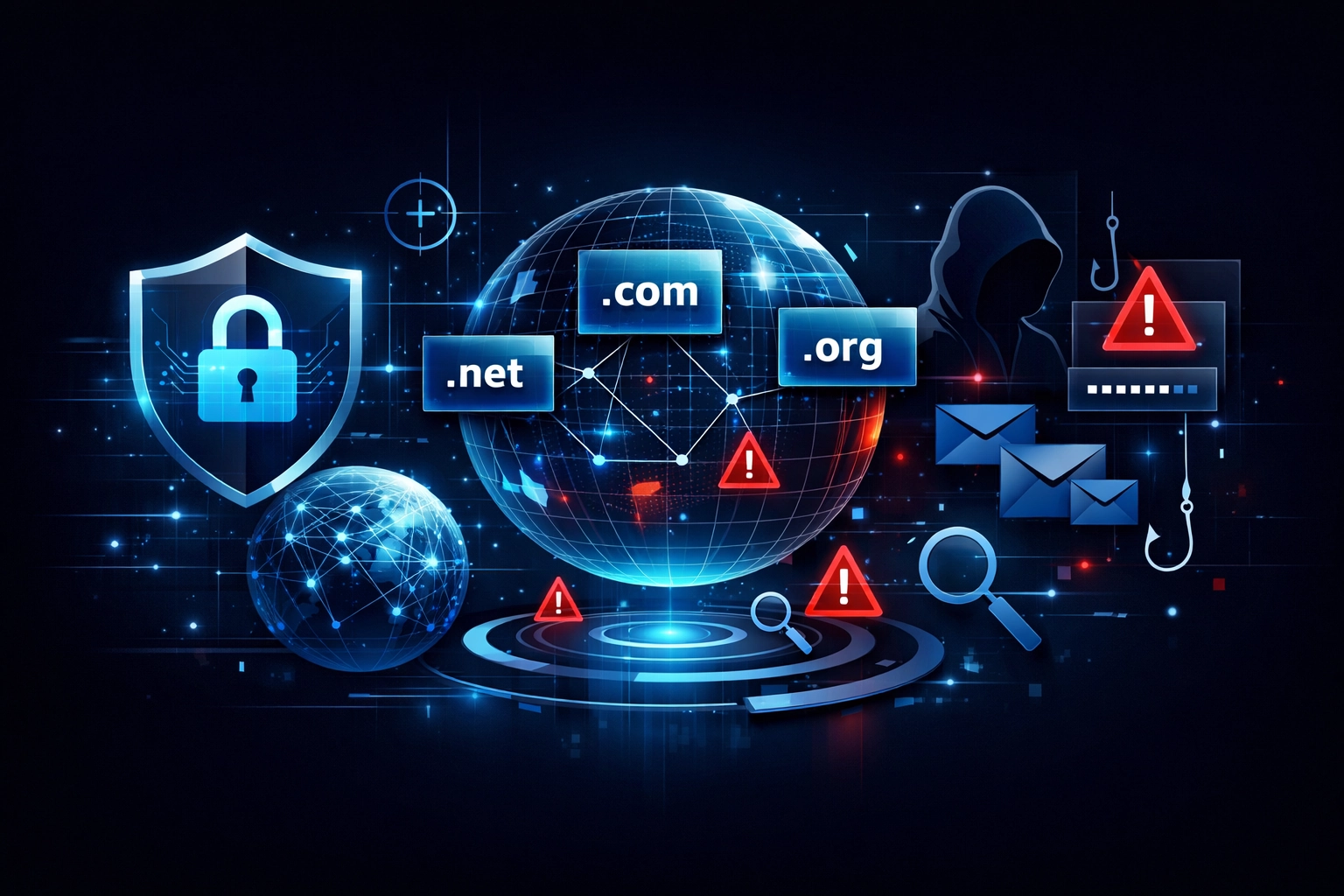
For automotive brands, the namespace is no longer a single website with a few associated social profiles. In a world where customers interact with brands through voice assistants, messaging apps, in-vehicle infotainment systems, and OTA software, the attack surface now includes domains that power or appear in those channels. Lookalike domains, phishing sites, and impersonation campaigns can seed trust erosion long before a consumer lands on a legitimate site. Threat actors increasingly exploit this expanded surface—using lookalike domains to weaponize voice-driven interactions, feeding spoofed communications into chat and voice channels, and targeting OTA update ecosystems through vendor portals and ancillary domains. The result is a multi-channel risk profile that requires 24/7 monitoring, cross-functional collaboration, and a threat lifecycle that ties domain security to customer trust.
Industry research and practitioner guidance increasingly underscore that protecting a brand online is not just about defending a website. Lookalike domains and domain impersonation have become core elements of phishing and brand-abuse campaigns, and defenders must move toward integrated, score-based risk management that spans DNS, TLS, and the rapidly evolving voice-first surface. Cisco’s analysis on brand impersonation, for example, shows how attackers exploit lookalike domains to bypass traditional defenses and impersonate trusted brands, highlighting the need for unified domain and brand protection. (blogs.cisco.com) Likewise, mainstream security teams are urged to connect domain threat intelligence with tactical takedown workflows to neutralize threats quickly and communicate clearly with stakeholders. (microsoft.com)
Why Voice Interfaces Multiply the Threat Surface
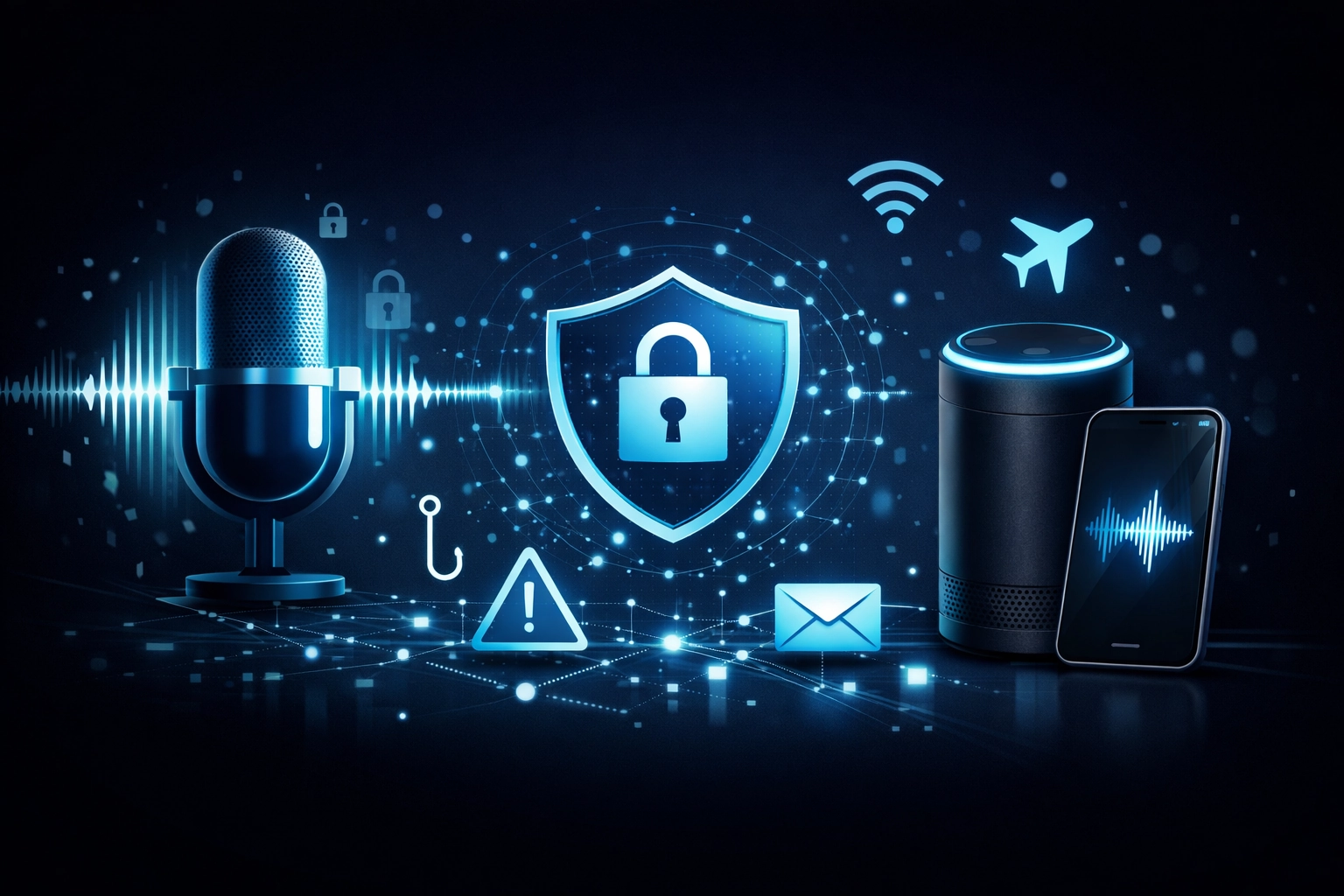
Voice-first interactions dramatically alter attacker playbooks. In the automotive sector, customers engage with brands via virtual assistants, in-car voice commands, customer support bots, and OTA update prompts. Each channel has its own textual and auditory cues, and attackers exploit both the visual mimicry of lookalike domains and the auditory trust implied by voice interactions. Phishing, brand impersonation, and typosquatting are not confined to a browser address bar; they can manifest in domain-visible cues used by voice assistants, in transcripts that appear in chat threads, or in domain-linked resources consumed by OTA firmware delivery pipelines. This convergence calls for a holistic approach that treats DNS hygiene, certificate integrity, and voice-channel integrity as a single risk stack. (microsoft.com)
Key Threat Vectors in the Voice-First Namespace
The following vectors illustrate how domain threats can manifest beyond conventional web pages:
- Lookalike domains feeding voice-enabled prompts. Attackers register domains that closely resemble a brand (e.g., slight misspellings or homoglyphs) and craft content or prompts that mislead users when they encounter voice-enabled interfaces. This technique leverages domain impersonation to harvest credentials or direct users to fraudulent services. Cisco highlights how such lookalike domains can bypass traditional defenses, emphasizing the need for cross-domain brand protection. (blogs.cisco.com)
- Vishing- and smishing-style attacks anchored to domain signals. Phishing campaigns increasingly combine textual and voice channels, leveraging domains that appear legitimate to seed trust before a user engages with a voice assistant or a support chat. Microsoft’s threat intelligence guidance recommends layered controls and fast, automated takedown to counter these multi-channel threats. (microsoft.com)
- Voice impersonation and AI-enabled brand spoofing. The literature and industry analyses are converging on the reality that attackers may clone voices or craft tone-matched prompts that imitate a brand’s support persona, complicating detection and response when the attack plays out in real time. This expands beyond mere domain errors to the authenticity of the communication channel itself. (doppel.com)
- Domain signals in OTA and vendor ecosystems. Automotive brands increasingly rely on OTA updates and vendor portals that reside on a hierarchy of domains. If any link in this chain is compromised, attackers can deliver malicious content or harvest credentials via domain signals that appear legitimate to the end user. Industry participants stress that securing the entire chain—from DNS records to TLS certificates and brand cues in the update flow—is essential to prevent supply-chain exposure. (mcpc.com)
A 7-Phase Framework for Voice-First Domain Defense
To operationalize protection across voice, chat, and OTA channels, a concrete lifecycle is necessary. Below is a practical seven-phase framework designed to be implemented within a multinational automotive brand or any enterprise with a distributed vendor ecosystem. Each phase emphasizes continuous governance, rapid action, and measurable risk outcomes.
- Discovery and inventory (multichannel domain surface). Establish a living inventory of all domains, subdomains, and assets that could influence voice-first interactions. Include non-web domains tied to OTA services, vendor portals, and API endpoints where domain signals appear in the customer journey. Extend the inventory to lookalike domains, tongue-in-cheek brand variants, and internationalized domain names (IDNs) that could be exploited in multilingual markets.
- Risk scoring by channel (multimodal risk assessment). Develop a tiered risk score that accounts for each channel’s impact on customer trust. Assign higher weights to domains that power OTA firmware delivery, in-car voice assistants, and support chat scripts. This scoring should integrate external threat intel with internal telemetry (page content, TLS cert data, DNSSEC status, and certificate transparency signals).
- Threat intelligence fusion (contextual, actionable insights). Tap threat intelligence feeds to identify newly registered domains, registrar changes, or anomalous certificate activity associated with your brand. CISCO’s guidance on brand impersonation emphasizes the need for a unified, scalable approach that combines domain data with brand signals for rapid action. (blogs.cisco.com)
- 24/7 monitoring and anomaly detection (continuous watch). Implement 24/7 monitoring across DNS, TLS, and content changes associated with your brand namespace. Consider cross-functional dashboards that align SOC with brand protection and legal teams to surface high-confidence threats in real time. Microsoft’s recommendations for phishing defenses underscore the necessity of automated, timely responses to evolving multi-channel threats. (microsoft.com)
- Automated takedown and remediation (from signal to action). Build a rapid takedown workflow that can be triggered by an elevated risk score, with clear ownership (security operations, legal, and communications). The capability to coordinate fast domain takedowns—especially for lookalike domains used in impersonation schemes—has proven critical in reducing brand impact. Industry practitioners emphasize law-enforcement coordination and pre-defined engagement plans to accelerate remediation. (mcpc.com)
- Verification and post-takedown review (closing the loop). After takedown, verify that the threat domain is effectively sink-holed or deactivated across its entire hosting chain, and review certificate status and content to prevent re-emergence. Ongoing reviews help establish resilience and inform adjustments to risk scoring and monitoring rules.
- Learning and governance (continuous improvement). Capture lessons learned, refine playbooks, and adjust cross-functional governance to incorporate new channels (e.g., evolving voice interfaces or OTA ecosystems). This phase ensures that your defense remains adaptive to both technological advances and changing attacker tactics.
Within this framework, you can create a continuum from discovery to takedown that mirrors the lifecycle of a threat, while ensuring cross-team accountability. The end goal is a defensible, auditable process that keeps brand signals trustworthy across every consumer touchpoint.
Operationalizing Voice-First Domain Defense in Automotive Ecosystems
A practical approach for global automotive brands is to synchronize security operations with the realities of supplier ecosystems, dealer networks, and OTA distribution channels. The most consequential threats to brand trust often originate in ancillary domains—domains used by dealers for provisioning, parts catalogs, or OTA update endpoints—that feed into the consumer journey through voice and chat interfaces. This cross-domain reality requires governance that spans DNS hygiene, certificate management, and channel-specific trust signals. A compelling way to operationalize this is through a 24/7 domain-threat operations center (DTRC) that brings together DNS specialists, threat hunters, and compliance/legal stakeholders. The DTRC can drive rapid takedowns, coordinate with registrars and hosting providers, and maintain a live log of actions for policy review and regulatory compliance. The combined effect is a more resilient customer experience across voice assistants, in-vehicle assistants, and support channels.
From a practical standpoint, the client landscape often includes a mix of owned domains, partner domains, and vendor portals. For example, a brand can consolidate its domain risk data using a central RDAP & WHOIS database to verify ownership and to inform takedown actions when impersonation attempts are detected. See the RDAP & WHOIS resources here: RDAP & WHOIS Database. In addition, domain inventory sources by TLD can help prioritize takedown readiness across high-risk namespaces, such as .com, .org, and other relevant extensions.
As you scale, consider channel-specific risk signals. OTA ecosystems, for instance, depend on secure distribution channels; any compromise in vendor portals or domain-driven update signals could cascade into customer-facing security gaps. A supply-chain-centric view of domain risk, paired with a 24/7 monitoring posture, helps ensure that a single compromised domain does not propagate across the vehicle’s connected experience.
Expert Insight and Practical Considerations
Expert consensus increasingly supports an integrated defense that spans DNS, TLS, and brand signals, especially as voice and OTA channels broaden exposure. An expert takeaway from Cisco’s brand-impersonation discourse is that a unified domain and brand protection strategy is essential to counter sophisticated impersonation campaigns that traditional controls miss. This framing aligns with Microsoft Threat Intelligence guidance, which advocates for layered, action-oriented defenses and rapid response workflows when multi-channel phishing and impersonation are detected. (blogs.cisco.com)
In addition, analysts highlight the growing relevance of AI-enabled impersonation risks—where attackers attempt to mimic a brand’s voice or persona in real-time communications. This reality makes human-in-the-loop processes and cross-channel awareness crucial, even as automated monitoring handles the bulk of signals. Industry observers also stress that effective defense requires not just detection but a well-rehearsed takedown and communications plan, including engagement with law enforcement when appropriate. (doppel.com)
Limitations and Common Mistakes: What to Avoid in Voice-First Domain Security
- Overreliance on a single channel. Many teams optimize for their primary website, forgetting that voice assistants and OTA channels require separate monitoring, identity verification, and alerting rules. The multi-channel reality demands a centralized framework that can translate risk signals into cross-functional actions. (Expert guidance from Cisco and Microsoft supports multi-channel coverage.) (blogs.cisco.com)
- Delays in takedown workflows. A slow or poorly defined takedown process allows impersonation domains or spoofed signals to persist, eroding brand trust. Establishing clear ownership and automation in the workflow is essential to reduce time-to-remediation. (mcpc.com)
- Neglecting identity validation across the DNS-to-TLS stack. DNSSEC, Certificate Transparency, and DANE are powerful tools, but their effectiveness depends on end-to-end deployment and proper configuration. Gaps in certificate validation can enable attackers to impersonate a brand even with DNS safeguards in place. (en.wikipedia.org)
- Ignoring legal and regulatory alignment. Quick takedowns are essential, but they must be conducted with lawful processes and documented to avoid unintended consequences. Engaging with law enforcement and maintaining governance records help ensure that rapid actions remain compliant and justifiable. (mcpc.com)
Practical Takeaways: How to Build a Resilient Voice-First Domain Defense
To translate the framework into concrete action, consider the following practical steps:
- Inventory everything that can influence voice-first trust. Expand your domain surface to include OTA endpoints, vendor portals, API domains, and voice-enabled subdomains. Treat every asset as a potential brand signal that could be spoofed.
- Adopt a channel-aware risk scoring model. Weight channels by customer impact (OTA delivery vs. subtle chat prompts) and adjust resource allocation accordingly.
- Unit-test takedown readiness. Run regular drills with legal, security, and communications to validate your ability to terminate threats across the DNS and application layers.
- Invest in threat intelligence and cross-functional dashboards. Correlate lookalike-domain registrations, TLS cert anomalies, and content changes with channel risk signals to prioritize actions.
- Engage with the client ecosystem for governance. Provide suppliers and dealers with clear guidelines on domain hygiene, certificate management, and reporting suspicious signals to your security operations. Resources such as a centralized RDAP & WHOIS database and domain inventories by TLD can support these efforts. RDAP & WHOIS Database, .com TLD inventory.
Case-Minded Resources and How to Act on Them
For teams seeking to deepen their voice-first domain defense posture, here are relevant resources that help contextualize and operationalize the concepts discussed above:
- Brand impersonation monitoring and protection services. Vendors offer domain intelligence and rapid takedown capabilities designed to protect brand signals across multiple channels. Look for platforms that integrate DNS, TLS, and content-signal monitoring into one workflow. (defenddomain.com)
- Threat intelligence for domain impersonation. Threat intelligence sources can feed a takedown engine with high-confidence indicators, enabling faster action against new impersonation domains. (theaintelligence.com)
- DNS and certificate infrastructure best practices. Employ DNSSEC, TLS certificate monitoring, and, where applicable, DANE to strengthen the binding between a domain and the services it authenticates. (en.wikipedia.org)
In multinational contexts, brands also benefit from geographic-focused domain risk awareness. Language-aware defenses are increasingly important as brands expand into regions with localized domain namespaces—an area where 24/7 domain threat governance can be tailored to country-specific regulations and market dynamics. For industry teams, this means combining regional inventories (Spain, Turkey, South Africa, etc.) with a global takedown playbook to ensure consistent brand protection. The SEO keyword family around geo-targeted domain data—such as “Download list of Spain (ES) websites,” “Download list of Turkey (TR) websites,” and “Download list of South Africa (ZA) websites”—can guide practical data gathering and prioritization without diluting focus on core defenses.
Conclusion: Building a 24/7 Voice-First Brand Shield
As brands extend their presence into voice interfaces, chat apps, and OTA ecosystems, domain security becomes a cross-cutting discipline that touches user trust, regulatory posture, and partner collaboration. A 7-phase lifecycle—discovery, risk scoring, threat intelligence, continuous monitoring, takedown, verification, and governance—offers a pragmatic blueprint for turning signals into decisive action. By integrating DNS hygiene, certificate integrity, and voice-channel signals into a unified defense, automotive brands can reduce impersonation risks, safeguard OTA integrity, and maintain customer trust across every touchpoint.
In this domain, Webasto Cyber Security and partner ecosystems offer a practical complement to in-house defense: a 24/7 security operations approach that coordinates domain threat intelligence with rapid takedown and clear communications. This integration supports a resilient customer experience while ensuring that brand signals remain trustworthy at the exact moments customers rely on them most.
If you’d like to explore a concrete, client-ready path to implement this approach, consider reviewing the offered resources and starting with a cross-functional workshop that aligns your SOC, legal, and brand teams around a shared voice-first domain defense roadmap. For an overview of related service options and pricing, see the Pricing page, and for domain-data tooling, the RDAP & WHOIS Database and TLD inventories linked above. Pricing, RDAP & WHOIS Database, .com TLD inventory.