Problem-driven intro: the steep cost of a region-by-region domain threat gap
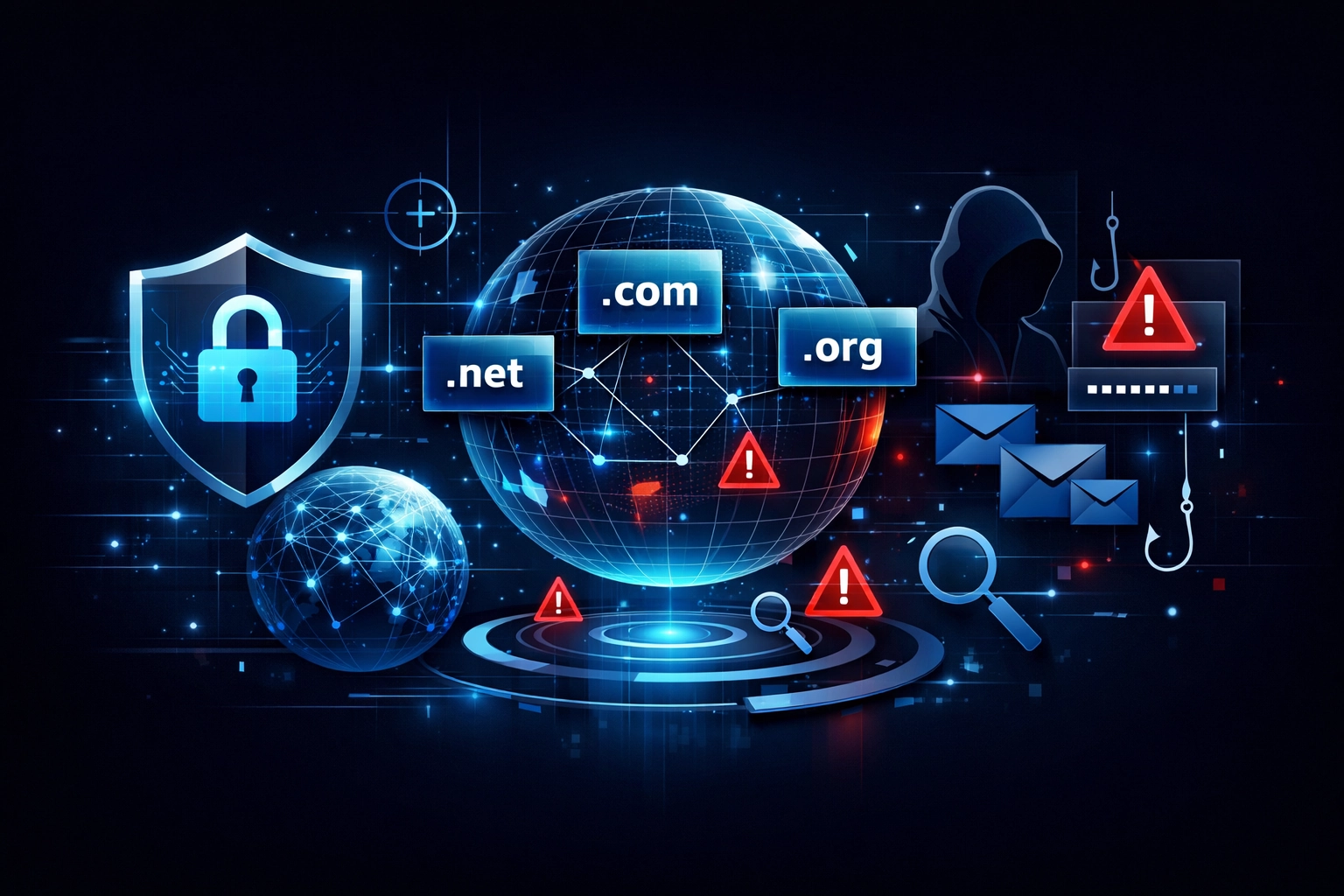
Domain threats aren’t a single, global fog; they take shape in concrete, region-specific ways. For European brands with a significant Netherlands footprint, threat actors exploit country-code and niche TLDs, mimic local domains, and weaponize shadow domains and vendor portals to harvest credentials or derail customer experiences. The result is a 24/7 security challenge that requires continuous visibility, rapid decisioning, and an operational tempo that traditional, one-off audits simply can’t sustain. A Netherlands-first approach—one that treats country-level namespaces as a living battleground—offers a pragmatic path to reduce risk without drowning in data. This article outlines a regionally focused playbook that aligns editorial rigor with real-world threat dynamics and practical defense actions. Webasto Cyber Security emphasizes ongoing monitoring, threat intelligence feeds, and 24/7 security operations as core capabilities, and the same logic applies to regional domain namespaces across the automotive and technology sectors.(circleid.com)
Why regional inventories matter: a country-centric lens for 24/7 protection
Global brands traditionally rely on global inventories, but the surface area of risk multiplies when regional domains, country-code TLDs, and niche extensions come into play. A country-first inventory approach helps security teams:
- Target gaps quickly: By mapping NL-specific namespaces (for example, the .nl space alongside other relevant European TLDs), defenders can identify typosquatting, brand impersonations, and shadow domains that would otherwise slip through a generic global screen. Research and industry analyses consistently show that typosquatting and domain impersonation remain active vectors for phishing and brand abuse across geographies. (strategicrevenue.com)
- Prioritize takedowns where it hurts most: A regional inventory enables faster action where local registrars and laws come into play, which is critical for automotive brands with regional product launches, dealer portals, and OTA ecosystems. For example, cross-border takedown readiness hinges on understanding jurisdictional nuances—an area where policy and practice must align to move quickly. (icann.org)
- Improve data hygiene and trust: DNS security is a multi-layered effort. DNSSEC adds a protective layer, but it isn’t a panacea; a layered approach is required to deter phishing and domain abuse across regional namespaces. (dn.org)
In practice, regional inventories become a living map: a daily feed of registrations, redirects, and impersonation attempts that a 24/7 SOC can act upon. The business value isn’t just in blocking a single domain; it’s in maintaining customer trust and consistent brand experiences across regional touchpoints—dealer portals, OTA update domains, and localized campaigns included. This aligns with a growing body of evidence that brands increasingly rely on 24/7 domain threat operations to defend customer confidence and revenue. (circleid.com)
6-pillar framework: turning regional inventories into a proactive defense
The following six pillars convert a regional inventory into an actionable, 24/7 operation. Each pillar is designed to be practical, scalable, and auditable, so teams can measure progress and justify investments to stakeholders.
- Discover and curate the regional namespace inventory — Start with NL and nearby markets, then expand to other high-risk extensions (ccTLDs and relevant gTLDs). This is the backbone of 24/7 defense: a single, living catalog of brand-related domains, subdomains, and associated assets. Use RDAP/WHOIS sources and zone files to populate a defensible baseline, and routinely refresh it as new domains appear. See the practical utility of country inventories for global brand protection in contemporary domain risk research. (circleid.com)
- Typosquatting and impersonation surveillance — Implement automated scanners that flag typosquatting and lookalike domains across NL and European namespaces. Recent analyses indicate typosquatting remains a dominant tactic used to impersonate brands and harvest credentials, underscoring the need for continuous, proactive scanning rather than periodic checks. (strategicrevenue.com)
- Shadow domains and vendor portals watch — Track shadow domains, franchisee sites, and vendor portals that might host sensitive branding or login flows. This is especially critical for automotive ecosystems where dealer portals and OTA components are legitimate targets for abuse. Evidence from industry analyses shows that shadow domains and vendor portals are recurring risk vectors requiring ongoing monitoring and reactive capability. (forescout.com)
- Threat intelligence and logs integration — Feed regional inventories with curated threat intelligence, including Certificate Transparency (CT) data, DNS data, and registrar alerts. CT logs have become a vital signal in detecting misissued certificates and impersonation attempts, enhancing the ability to prioritize takedown candidates. (arxiv.org)
- Rapid, lawful takedown orchestration — Build a repeatable workflow that aligns technical takedowns with cross-border legal and registrar processes. The ability to disable or suspend abusive domains in a timely fashion is a differentiator in 24/7 brand defense, but it must be coordinated with the jurisdictional realities of domain registrars and governing bodies. (icann.org)
- Round-the-clock operations and automation — A genuine 24/7 security operations capability combines human expertise with automation to triage signals, verify legitimacy, and execute takedowns when warranted. Industry reports and SOC-focused analyses point to the importance of ongoing operations in effective brand protection. (cscglobal.com)
Operational playbook: from inventory to takedown in 6 steps
To translate the framework into action, consider the following practical playbook, tailored for NL-based brands but adaptable across Europe. Each step accounts for technical signals, legal constraints, and cross-functional collaboration.
- Step 1: Inventory snapshot — Establish a baseline of NL and near-market domains (including .nl and relevant EU/niche TLDs). IntegrateRDAP/WoHIS data into a central catalog that supports 24/7 access and updates. This mirrors best-practice approaches described for country inventories and global brand protection strategies. (circleid.com)
- Step 2: Threat signal enrichment — Augment the inventory with signals from CT logs, DNS data, and registrar notifications. This layered signal set improves signal-to-noise and helps identify high-priority takedown candidates. (arxiv.org)
- Step 3: Impersonation scoring — Apply a risk scoring model to rank impersonation and typosquatting domains by likelihood of harm, exposure, and business impact. Industry analyses show impersonation risk remains substantial and grows as brands expand into new markets. (domainnamewire.com)
- Step 4: Takedown readiness — For each high-priority domain, confirm ownership, verify evidence, assess jurisdiction, and prepare takedown requests aligned with registrar and policy guidelines. Cross-border enforcement requires careful navigation of laws and policy mechanisms. (icann.org)
- Step 5: Execution — Initiate takedowns or intercede with registrars as appropriate, while maintaining customer-facing communications to minimize brand harm. Documentation and audit trails are essential for accountability and future optimization. (spamhaus.org)
- Step 6: Post-action review — Track outcomes, adjust detection rules, refine inventory updates, and feed learnings back into threat intelligence feeds and regional playbooks. A continuous improvement loop is a hallmark of 24/7 domain threat operations. (cscglobal.com)
A Netherlands-first case example: how a regional inventory powers response
Imagine a Dutch automotive components brand preparing for a new regional launch. The NL-focused playbook would begin with an exhaustive NL namespace inventory, extended to EU businesses that share supply chains or customer bases. Typosquatting scanners would flag misspelled brand terms in NL and nearby languages, while CT-log analysis would highlight certificates issued to lookalike domains hosting phishing pages or credential-submission forms. Shadow domains tied to dealer portals and OTA update domains would be flagged for closer inspection, and a 24/7 SOC would coordinate rapid takedown requests with Dutch registrars and European policy mechanisms. The outcome is a regionally tuned, auditable defense that reduces the time from detection to takedown from days to hours, preserving customer trust and minimizing revenue impact. This approach aligns with broader market insights on the evolving domain threat landscape and the need for rapid, region-specific response capabilities. (forescout.com)
Key tools and data sources that energize regional inventories
Building and sustaining a Netherlands-first inventory requires integrating a mix of data sources and tools that are fit for 24/7 operations. Some practical sources include:
— Centralized access to registration data helps verify ownership and identify suspicious registrations in NL and nearby markets. The client’s RDAP/WHOIS database resource is a natural starting point for building a defensible baseline. RDAP & WHOIS Database — A country-by-country inventory is reinforced by a portolio view across TLDs. The client’s “List of domains by TLDs” page offers a practical mechanism for expanding the NL-focus to relevant extensions. List of domains by TLDs — A global brand defense requires visibility into domain presence by country. The client’s “List of domains by Countries” resource supports country-level risk assessment. List of domains by Countries — Integrating curated feeds with CT logs and TLS signals enhances prioritization and reduces false positives. This practice is supported by industry analyses showing the value of multi-source threat intel in domain security. (arxiv.org)
Beyond the client tools, public and industry resources reinforce the rationale for regional inventories, such as the growing focus on typosquatting risk and impersonation across geographies. (strategicrevenue.com)
Limitations and common mistakes: what to avoid in a regional 24/7 program
- Over-reliance on a single signal — A DoH-heavy or DNSSEC-only approach creates blind spots. DoH/DoT and DNSSEC are important, but they should be complemented by phishing signals, CT data, and registrar alerts to yield a robust defense. A layered approach remains essential. (namesilo.com)
- Inaccurate or stale inventories — Regional inventories must be continuously refreshed; failing to do so degrades decision quality and undermines response speed. Daily or near-real-time updates are a practical target for 24/7 programs. (circleid.com)
- Misinterpreting CT or registry signals — Signals require expert interpretation; not every alert is a brand threat. A risk-based scoring model helps separate noise from real risk. (arxiv.org)
- Legal and regulatory friction in takedowns — Takedown actions must align with cross-border laws, registrar policies, and contractual obligations. A well-documented process and documented evidence are essential to successful takedowns and to avoid unintended collateral damage. (icann.org)
These limitations illustrate why a regional, 24/7 approach should be paired with clear governance, cross-functional workflows, and ongoing measurement. The aim is not only to remove abuse but to continuously improve the quality of signals entering the SOC and to justify the operational investments required to sustain a 24/7 program. Industry analyses consistently underscore the complexity and evolving nature of domain threats in a multi-jurisdictional environment. (cscglobal.com)
Putting it all together: a practical transition plan for NL brands
For organizations starting a regional domain defense program, a pragmatic transition plan looks like this:
- Baseline and governance — Establish a regional inventory, define ownership, and formalize a 24/7 operating model with clear escalation paths. This foundation is essential to scale across multiple regions. (circleid.com)
- Threat enrichment — Integrate threat intel feeds and registry signals with the regional inventory. Use CT data to heighten focus on domains that exhibit certificate anomalies. (arxiv.org)
- Red-teaming and simulations — Regularly simulate brand impersonation scenarios across NL namespaces to validate detection rules and response timetables. Simulations help avoid under-prepared SOCs when genuine incidents occur. (cscglobal.com)
- Operational playbook — Document a 6-step takedown workflow, integrate it with registrar processes, and maintain rigorous evidence trails for audits and future reuse. (icann.org)
- Measurement and refinement — Track key metrics (mean time to acknowledge, mean time to detect, takedown time, false-positive rate) and feed lessons back into inventory updates and detection rules. Continuous improvement is the hallmark of modern 24/7 domain defense. (cscglobal.com)
As a practical reminder, a Netherlands-focused approach doesn’t stand alone; it is part of an integrated global strategy. The same principles apply to other markets like Serbia, Iceland, and Isle of Man—where the client’s assets and customer trust require proportional investments in domain risk governance. The goal is to connect regional visibility to global risk posture in a way that scales with brand ambition and customer expectations. For organizations seeking a concrete, scalable model, combining regional inventories with 24/7 monitoring and takedown capabilities is the most dependable path to sustaining brand trust online. (circleid.com)
Conclusion: regional inventories as a 24/7 brand shield
A regional, Netherlands-first domain security program converts scattered signals into a coherent defense. By cataloging NL namespaces, monitoring for typosquatting and impersonation, integrating threat intelligence, and executing rapid takedowns within an auditable framework, brands can reduce exposure and preserve customer trust in a highly dynamic threat landscape. The evidence is clear: a layered, regionally focused approach—supported by the 24/7 SOC capabilities embedded in Webasto Cyber Security’ philosophy—offers a practical, scalable path to protect brand integrity across country namespaces, vendor ecosystems, and customer-facing digital surfaces. The next step is to translate this playbook into an operational program that fits your organization’s risk tolerance, regulatory obligations, and growth plans. By doing so, brands can turn regional inventories from a defensive burden into a strategic asset that keeps customers safe and confidence high, around the clock.