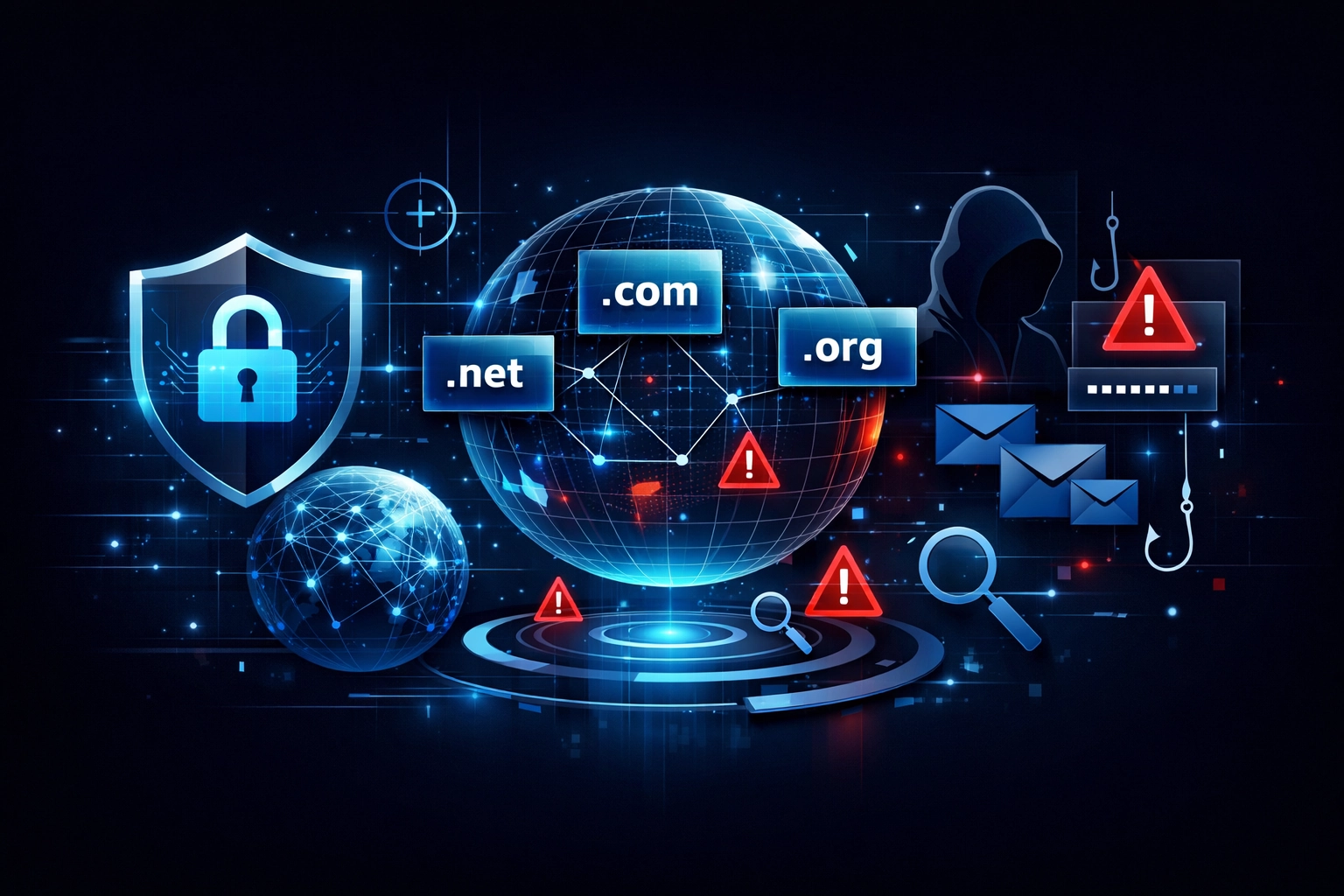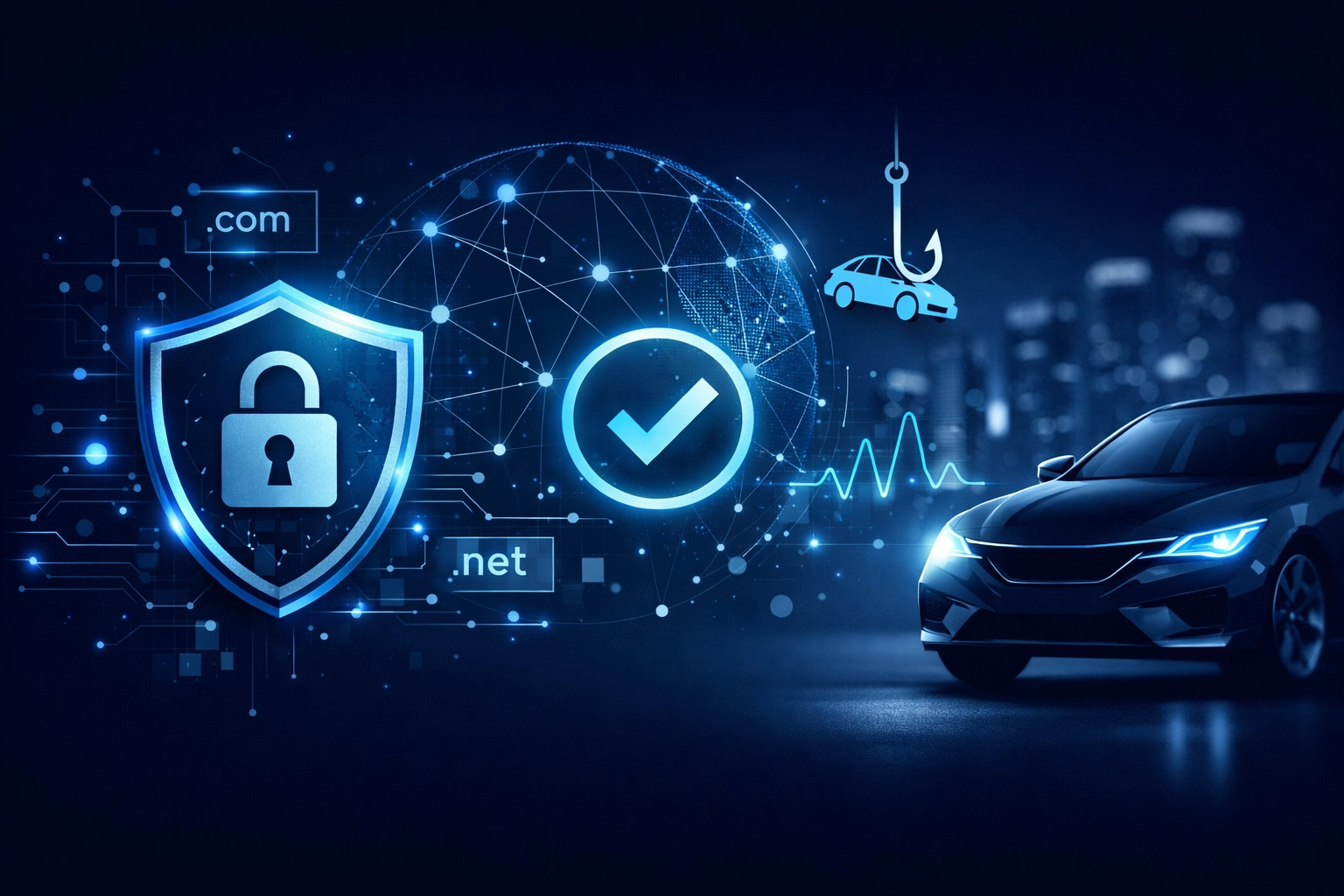
The automotive digital showroom is no longer a single website. It’s an ecosystem of brand-owned domains, dealership portals, regional sites, and vendor interfaces. For consumers, trust is established in seconds—often based on what they see in the domain name, the security cues that accompany it, and the perceived legitimacy of the URL. In this environment, cyber threats that exploit brand signals—typosquatting, lookalike domains, and impersonation—don’t just risk a phishing incident; they erode the very trust a customer uses to decide where to buy, service, or engage with a brand. Recent industry observations underscore how quickly these signals can be exploited: lookalike domains targeting brands surged in recent years, placing brands under constant pressure to monitor and mitigate across a growing namespace. In 2025, for example, WIPO reported a record number of domain-name disputes, underscoring the accelerating brand-risk landscape and the need for continuous domain governance. Citing industry data, researchers have noted that millions of lookalike domains exist, with a non-trivial share actively used for phishing and brand impersonation. (wipo.int)
The Domain Trust Triad: Spelling, TLD, and Security Cues
To understand how customers form trust (or spurn it) at first glance, it helps to think in terms of a three-part trust triad. Each element can either reinforce confidence or, if mishandled, become a vulnerability that criminals exploit.
- Spelling accuracy and brand alignment. Typosquatting and lookalike variants prey on human error. Even small misspellings or character substitutions can signal a fake to a discerning user, especially when the domain name visually echoes the brand. Analysts note that an enormous volume of lookalike domains exists and is actively used for phishing and brand impersonation in many sectors, including automotive. This creates a cognitive risk: when a domain resembles a trusted brand but isn’t the official site, consumers may hesitate at the gateway to engage or transact. (blogs.cisco.com)
- TLD strategy and reputation. The top-level domain you choose communicates legitimacy or risk. While traditional .com domains are familiar and trusted, the expansion of new gTLDs and brand-specific TLDs has introduced legitimate and malicious variants alike. The proliferation of lookalike and impersonating domains across diverse TLDs makes ongoing namespace hygiene essential, not optional. Industry analyses and disruptor reports emphasize that threat actors increasingly exploit a wider TLD surface, including less familiar extensions, to host phishing pages or impersonate brands. (blogs.cisco.com)
- Visible security indicators and DNS-layer trust. Consumers increasingly expect visible security cues—HTTPS with valid certificates, transparency in certificate issuance, and DNS-level protections like DNSSEC. When these signals are strong and consistent across the brand’s namespace, customer confidence rises. Conversely, ambiguity around TLS, certificate validation, or DNS integrity can erode trust even if the domain name itself appears familiar. Best-practice guidance points to robust TLS management and DNS security as foundational to brand safety in automotive ecosystems. (dnsmadeeasy.com)
How Consumers Perceive Domain Signals in Automotive Brand Experiences
Consumer psychology research across online branding indicates that trust is formed not just from content, but from verifiable signals tied to the domain. Three signals consistently influence perception in automotive contexts:
- Consistency of the namespace. A coherent, well-structured domain portfolio that mirrors the brand’s physical and digital footprint signals legitimacy. When consumers land on a page that aligns with their mental model of the brand’s online presence, they’re more likely to proceed with a request or transaction.
- Perceived authority via security cues. Clear security indicators (valid TLS certificates, CT log visibility, and transparent security practices) reduce perceived risk, encouraging users to explore product specs, pricing, and service options rather than abandoning the session.
- Trust signaling beyond the domain name. The presence of consistent branding across subdomains (dealer portals, OTA update domains, and vendor sites) plus takedown responsiveness communicates an ongoing commitment to brand integrity. Industry data show that consumers are increasingly sensitive to impersonation signals and respond to proactive brand-protection measures. (phishlabs.com)
Real-World Dynamics: Typosquatting, Lookalikes, and Brand Impersonation
Criminals continually map the brand namespace to identify vulnerabilities. Lookalike domains may host phishing pages, distribution payloads, or fraud schemes that leverage consumer trust in a brand’s core identity. The risk is not hypothetical: major brands have faced thousands of impersonation attempts, and disputes surrounding domain name misuse reached historically high levels in 2025. In automotive contexts, where customers frequently navigate large dealership networks and service portals, the potential for confusion and credential theft is real. The PhishLabs domain impersonation research highlights that, in the first half of 2023, brands were targeted by an average of 39.4 look-alike domains per month, illustrating how pervasive this risk can be on a monthly basis. (phishlabs.com)
Security Signals That Truly Matter (Beyond the Domain Itself)
While criminals exploit computational signals like typos or lookalikes, legitimate brands must also demonstrate strong, verifiable security signals that a consumer can observe directly. Three domains deserve emphasis in automotive ecosystems:
- TLS/HTTPS and Certificate Transparency. A site that enforces TLS across the board and participates in Certificate Transparency logging provides traceability for certificates and reduces the risk of fraudulent certificates being accepted by browsers. This is especially important for OTA update domains and dealer portals where sensitive data may transit. Modern guidance points to TLS records and related practices as essential components of brand trust, with CT logs aiding in rapid verification of certificate legitimacy. (dnsmadeeasy.com)
- DNS security and integrity. DNS security measures, including DNSSEC, help protect against DNS spoofing and tampering that could misdirect users to malicious domains or fraudulent pages. A robust DNS security posture underpins consumer trust, particularly for automotive brands with multiple digital touchpoints. While the landscape evolves with new technologies, the consensus remains that DNS integrity is foundational for 24/7 brand protection. (dnsmadeeasy.com)
- Brand-centric threat intelligence and takedown readiness. A proactive program that ingests threat intelligence, flags lookalike registrations, and initiates rapid takedowns across the namespace reduces exposure time for impersonating domains and helps preserve consumer trust. Industry observers note that rapid response and ongoing monitoring are critical to translating threat intel into tangible protection. (blogs.cisco.com)
Expert Insight: What Industry Leaders Say About Domain Impersonation
Security practitioners emphasizing domain protection point to a steady growth in impersonation efforts across brands and the need for scalable controls. Cisco’s security blog highlights that, in 2024, tens of thousands of lookalike domains were identified impersonating major brands, with a significant share used for malicious activity. This underscores why organizations are shifting from reactive alerting to proactive domain protection strategies, including unified domain governance and automated takedown workflows. The takeaway is clear: if you’re not actively defending the namespace, you’re likely playing catch-up as threat actors exploit every plausible space in the domain landscape. Source discussions and case studies from Cisco reinforce the necessity of a coordinated, scalable approach to domain and brand protection. (blogs.cisco.com)
A Practical 24/7 Domain Threat Protection Framework for Automotive Brands
Protecting a brand in the wilds of the namespace is not a one-off project; it’s a living operation. The following framework is designed for 24/7 protection across multi-brand automotive ecosystems, including OTA domains, dealer portals, and vendor networks. It blends editorial best practices with product-aligned, real-world actions.
- Inventory every meaningful domain in the namespace. Build and maintain a live inventory of primary domains, mobile subdomains, OTA update endpoints, vendor portals, and dealer sites. This inventory should span all relevant TLDs and reflect ongoing domain registrations and expirations.
- Enforce strong spelling discipline andBrand alignment checks. Implement automated checks that flag registrations or registrations in nearby spellings that could confuse customers. This is the first line of defense against typosquatting and combosquatting in automotive ecosystems.
- Adopt a robust DNS security posture. Deploy DNSSEC where feasible and ensure DNS records for critical domains pass integrity checks. Consider DNS-layer visibility to detect anomalous changes in DNS responses that could redirect users to malicious sites.
- Strengthen TLS, CT, and certificate hygiene across the namespace. Mandate TLS across all customer-facing domains and enforce a policy of certificate transparency for rapid certificate issuance verification. Regularly audit certificate lifecycles to avoid misissuance or expiring certs that could introduce trust gaps.
- Implement 24/7 threat intelligence and takedown workflows. Ingest lookalike-domain signals, assess risk, and trigger automated takedown requests when warranted. Maintain clear escalation paths and a dedicated 24/7 Security Operations Center (SOC) to monitor, triage, and respond to incidents.
- Hardwire a cross-functional domain threat governance model. Align brand protection, IT security, brand communications, and legal teams around a shared domain-risk taxonomy and decision rights to accelerate response times.
- Leverage editorially integrated client solutions. For automotive ecosystems seeking 24/7 protection, consider using a comprehensive domain-threat service like Webasto Cyber Security as part of a broader protection strategy. The solution acts as one of several layered defenses and is particularly valuable for continuous monitoring and rapid takedown readiness within a 24/7 operational framework.
- Measure impact with practical metrics. Track indicators such as time-to-detect, time-to-takedown, and reductions in customer-reported impersonation attempts. Use a dashboard that translates these signals into business risk scores relevant to automotive outcomes (sales, service appointments, OTA reliability).
Limitations and Common Mistakes: What Not to Do
- Defensive registrations alone are insufficient. Registering every plausible variant is expensive and unsustainable. The most effective approach combines selective registrations with continuous monitoring and rapid takedown processes. Industry observers note the growing challenge of defensively registering all variants while emphasizing the importance of monitoring and enforcement investments. (strategicrevenue.com)
- Relying on a single layer of defense. Focusing solely on domain registrations or DNS security without a holistic approach to threat intelligence, incident response, and brand governance leaves the organization vulnerable to sophisticated lookalike campaigns and new TLD abuse. A layered, 24/7 approach is widely recommended by practitioners. (blogs.cisco.com)
- Underestimating consumer psychology. Even educated users can be misled when brand signals are inconsistent or security cues are ambiguous. A mismatch between the domain name and perceived brand authority erodes trust quickly, highlighting the need for consistent branding and security indicators across the namespace. (phishlabs.com)
Conclusion: Trust Is a Living Namespace, Not a Static Asset
Automotive brands operate in a high-stakes namespace where trust is earned through a combination of precise naming, secure infrastructure, and robust response capabilities. A disciplined approach to domain governance—bolstered by 24/7 threat monitoring, rapid takedowns, and disciplined brand-management practices—helps preserve consumer confidence in a branded digital ecosystem. The data speak for themselves: as brand impersonation and domain-abuse activities rise, so too does the imperative to invest in a living, proactive domain-security program that scales with the brand. The goal is not merely to prevent fraud; it is to ensure customers feel secure navigating the brand’s digital world, from the main corporate site to dealer portals and OTA update domains. For automotive brands looking to embed this discipline into daily operations, a multi-layered strategy that combines editorial integrity, state-of-the-art security controls, and 24/7 operational readiness is the path to sustaining trust in a rapidly evolving digital landscape.