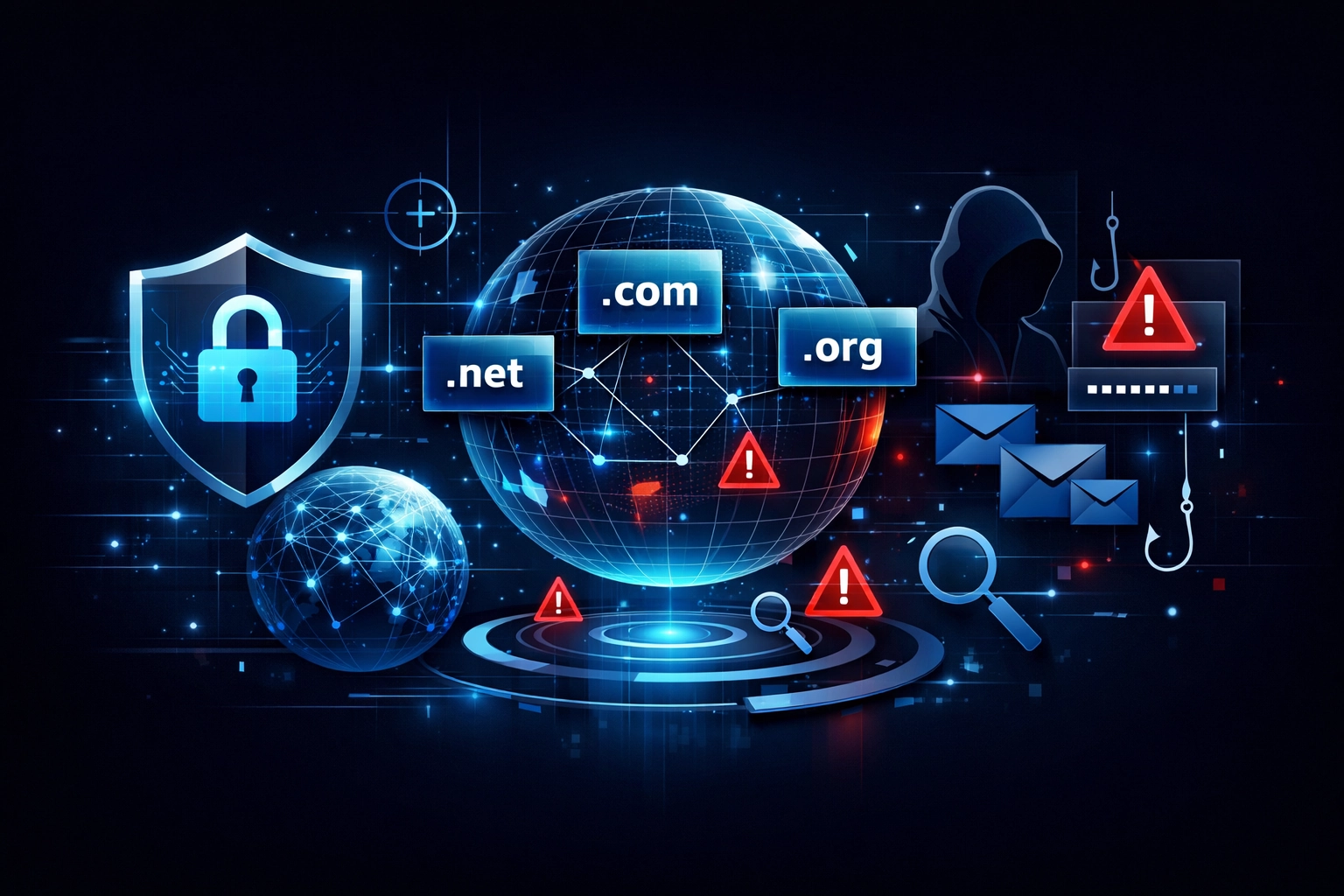
Observability-Driven Domain Security: A 3-Channel Framework for 24/7 Brand Shield
The brand namespace of a modern enterprise is a living, multi-channel surface. It spans owned domains, regional TLDs, dealership and vendor portals, OTA software update endpoints, and increasingly, in-vehicle digital surfaces that customers interact with. When any one facet of that namespace is compromised or impersonated, customer trust—the bedrock of an automotive brand—can erode within minutes. Broadly speaking, domain threats come in several flavors: typosquatting that dupes users with near-identical URLs, homograph and Unicode spoofing that exploit visual similarity, phishing that leverages trusted brand cues, and shadow or parked domains that silently host malware or counterfeit experiences. The result is repeated headlines, misplaced brand value, and costly remediation cycles. Contemporary industry insights consistently show that attackers exploit today’s expansive domain footprint, making robust, 24/7 domain threat protection not optional but essential. [Expert insight: threat actors increasingly rely on domain-based deception to sow distrust, and enterprises must operationalize continuous monitoring rather than one-off detections.]
To move from reactive alerts to proactive, verifiable protection, this article proposes an observability-driven approach: a three-channel framework that any multinational brand—including automotive OEMs and their suppliers—can operationalize today. The core idea is simple: fuse three streams of truth—what a domain has done in the DNS, what TLS certificates claim about who owns it, and what the takedown ecosystem signals about misuses—to create a living inventory that is constantly refreshed, cross-validated, and action-ready 24/7. This is the backbone for a 24/7 security operation that not only detects but also de-risks brand exposure across the entire domain surface.
Why a three-channel observability approach now?
Traditional domain protection programs have tended to rely on point-in-time scans, static whitelists, or isolated threat feeds. While useful, these approaches often miss the dynamic, cross-domain tactics adversaries use to exploit brands in real time. Notably, the modern threat landscape increasingly features: - Typosquatting and homoglyph attacks that create convincing look-alikes across numerous TLDs and new gTLDs; the risk is amplified by near-identical brands appearing in new or less-regulated namespaces. (dnsfilter.com) - Phishing and brand impersonation that exploit TLS certs and visible domain signals, including misissued certificates that browsers and CT logs seek to surface. (developer.mozilla.org) - Shadow domains and parked domains that masquerade as legitimate properties and host deceptive content, often evading traditional static blocks. (dnsfilter.com) A three-channel observability framework—Passive DNS, Certificate Transparency (CT) Logs, and public takedown signals—provides a more reliable, end-to-end view of risk. It ties together what a domain has done over time, what is publicly asserted about its identity via TLS, and what enforcement mechanisms (like UDRP-based takedown) have been invoked or are being pursued. The result is a continuously refreshed risk surface you can measure, govern, and act upon with consistency across regions and brands. (www3.cs.stonybrook.edu)
The three channels of observability in practice
1) Passive DNS Monitoring: the memory of a domain
Passive DNS monitoring stores historical DNS resolution data to reveal what domains have been resolving to, where, and when. This memory helps detect suspicious patterns such as rapid appearances of look-alike domains around product launches, or unusual changes in name server ownership that could indicate domain hijacking or redirection to an attacker-controlled infrastructure. The value of passive DNS as part of a 24/7 SOC is that it moves threat detection from reactive to proactive, enabling you to see a domain’s lifecycle in near real time and flag anomalies for immediate investigation. Researchers and practitioners increasingly codify passive DNS as a foundational pillar of threat observability. (www3.cs.stonybrook.edu) - Use cases include identifying newly registered domains that resemble core brands, or unexpected DNS changes around critical events (e.g., a new OTA software release) that could signal a brand impersonation effort. - Limitation/mistake: relying on passive DNS alone without corroborating signals can raise false positives if benign marketing or regional testing changes DNS in legitimate ways. A cross-channel view mitigates this risk.
2) Certificate Transparency (CT) Logs: public visibility into TLS issuance
Certificate Transparency is a standardized, auditable ledger of TLS certificates that helps domain owners detect misissued or rogue certificates that could be used for phishing or brand impersonation. CT logs are publicly accessible, append-only, and designed to surface certificates associated with a domain so owners can request revocations or takedowns when abuse occurs. Browser vendors and CA programs increasingly require CT-logged certificates, which makes CT a critical signal in the defender’s toolkit. For enterprise brand protection, CT logs provide a transparent backdrop for certificate-related risk and enable rapid detection of unusual cert issuance tied to your brand namespace. (ietf.org) - Expert insight: CT visibility lets defenders observe certificates that may have been issued without consent and take action before customers encounter malicious sites. - Limitation/mistake: CT logs are a powerful signal, but they require active monitoring and correlation with DNS data; relying on CT alone can miss non-TLS-based deception channels such as typosquatted domains hosting non-HTTPS content. (ssl.com) - Practical note: CT has matured to version 2.0 (RFC 9162) and is integrated into modern TLS ecosystems; operators should align CT monitoring with current standards and CT log policy. (ietf.org)
3) Public takedown signals: notices, disputes, and enforcement
Public takedown signals—whether through UDRP-based domain-name dispute resolutions, court actions, or administrative takedowns—provide authoritative, enforceable actions against abusive domains. ICANN’s Uniform Domain-Name Dispute Resolution Policy (UDRP) governs many gTLDs and ccTLDs for trademark-based disputes, with procedures and rules for resolving abusive registrations. While the process differs by registrar and jurisdiction, the core principle is that legitimate domain owners can seek transfer or cancellation of infringing names, creating a formal mechanism to shrink the attack surface over time. Integrating takedown signals into your three-channel observability framework anchors threat data in real-world outcomes. (icann.org) - The law and policy landscape continues to evolve; organizations should track ongoing updates to UDRP rules and enforcement timelines to ensure timely alignment with regional regulatory expectations. (icann.org) - Limitation/mistake: a takedown is not always fast enough to prevent customer exposure; combine takedown workflows with rapid detection to minimize dwell time of abusive domains. ICANN/WIPO guidance helps frame a compliant route to action. (wipo.int)
Operationalizing the three-channel framework: a pragmatic playbook
Implementing observability across passive DNS, CT logs, and takedown signals requires a disciplined, repeatable process. Below is a practical, action-oriented playbook designed for multinational automotive brands and their ecosystems that emphasizes 24/7 operations, data fusion, and measurable outcomes.
- Step 1 — Inventory the surface: Assemble a living inventory of domains, subdomains, vendor portals, OTA endpoints, and brand-related digital surfaces across all regions. Include potential future namespaces (emerging TLDs and brand-specific web spaces) to ensure forward visibility. This inventory becomes the backbone for ongoing monitoring and risk scoring.
- Step 2 — Activate the three-channel monitors:
- Enable Passive DNS monitoring to capture the resolution history and changes in name servers for your core brands and competitors’ domains that could be used in impersonation campaigns.
- Enable Certificate Transparency monitoring to flag new certificates associated with your brand and to surface misissuance patterns that could enable phishing or SSL-wielding brand impersonation.
- Set up a takedown signal feed by tracking UDRP requests, court filings, and registrar-level notices for your brand names, product lines, and key slogans.
- Step 3 — Enrich and correlate: Normalize data across channels and correlate DNS, TLS, and takedown signals to identify high-confidence threats. Correlation should prioritize suspicious domains that appear across multiple channels (e.g., a domain that recently appeared in DNS history and is associated with a TLS certificate and a takedown notice). Academic and industry research emphasize cross-channel correlation for more accurate detection of domain-based threats, including typosquatting and generated squatting. (arxiv.org)
- Step 4 — Decide on a response tier: Establish thresholds for automatic remediation versus human-in-the-loop actions. For example, domains with repeated DNS changes and CT-issued certificates tied to your brand should trigger an automatic notification and a security operations playbook for takedown, customer advisories, and brand trust communications.
- Step 5 — Execute takedown and enforcement: Engage registrar dispute processes (UDRP) where applicable, coordinate with WIPO/ICANN mechanisms, and leverage existing vendor portals for rapid credential revocation or blocking. Use credible, lawful channels to reduce dwell time and exposure. (icann.org)
- Note: UDRP and similar processes can be complex and region-specific. Plan proactive, region-aware takedown readiness with clear escalation paths.
- Step 6 — Close the loop with 24/7 SOC coverage: Formalize a 24/7 security operations center (SOC) workflow that triages cross-channel signals, assigns ownership, and documents outcomes. Track metrics such as mean time to detect (MTTD) and mean time to resolve (MTTR) to prove program effectiveness. (secureframe.com)
- Step 7 — Governance and continuous improvement: Create a governance model that links brand risk appetite with operational signals. Regularly review threat intelligence, update the living inventory, and refine detection rules to adapt to evolving attack surfaces.
Expert insight and practical limits
Expert insight: In a world where certificate issuance and DNS signals can be decoupled from immediate customer experience, a fusion of CT visibility with cross-domain DNS intelligence is proving essential for early detection of misuses and brand impersonation. This combined approach helps brand teams move beyond isolated alerts toward a defensible, data-driven risk posture.
Limitations and common mistakes: - Overreliance on one channel, such as passive DNS or CT alone, can leave blind spots (e.g., non-HTTPS content or domain registrations that precede certificate issuance). A three-channel framework mitigates this risk. (developer.mozilla.org) - Delayed takedown actions can prolong exposure. A mature framework couples early detection with a deterministic takedown workflow aligned to regional policies and UDRP timelines. (icann.org) - Security teams sometimes overlook cross-border legal complexities. The UDRP process, while powerful, is jurisdiction-dependent and can influence response timelines; ongoing governance helps align expectations with regulatory realities. (icann.org)
Concrete framework artifacts you can adapt today
To translate the three-channel approach into tangible practices, consider these artifacts that teams can create or adapt:
- Living inventory template: A living, region-aware manifest of brand-related domains, subdomains, vendor portals, and OTA endpoints, with metadata for registration date, registrar, DNSSEC status, and CT status.
- Cross-channel correlation rules: Lightweight rules to flag domains that appear in ≥2 channels within 24–72 hours, with automated escalation pathways.
- TAKEDOWN playbook outline: A jurisdiction-aware workflow that maps takedown options (UDRP, court action, registrar notices) to regional readiness timelines and escalation points.
- SOC dashboards: Metrics such as MTTD and MTTR, incident counts by channel, and trendlines showing threat surface reduction over time.
- Threat intelligence feed wrapper: An enrichment layer that filters external feeds (phishing campaigns, brand impersonation trends) through your inventory and correlation rules to prioritize actions.
Where Webasto Cyber Security and webatla fit in
In practice, a three-channel observability framework is most effective when paired with a mature 24/7 security operations capability and a robust threat intelligence program. The client ecosystem referenced here—Webasto Cyber Security and webatla’s domain threat intelligence and takedown services—offers a concrete path to operationalize this approach across borders. For organizations negotiating the complexities of global brand protection, webatla’s portfolio of domain intelligence assets—such as RDAP & WHOIS databases and country/top-level domain inventories—provides a ready-made feed to feed the passive DNS and CT-monitoring engines, while also supporting rapid takedown and legal coordination. See the client portfolio pages for more detail: RDAP & WHOIS Database and TLD and country inventories.
External anchors for this approach include established governance and enforcement mechanisms, such as ICANN’s UDRP framework for domain disputes and WIPO’s administration of the process—useful references when designing your own takedown pathways and cross-border playbooks. (icann.org) - The three-channel observability approach is compatible with a broad spectrum of brand contexts, including automotive and industrial ecosystems, where dealer portals, OTA engines, and online showrooms expand the brand namespace. It aligns with ongoing industry discussions about proactive domain risk governance and 24/7 brand protection across global surfaces. (dnsfilter.com)
A note on measurement and ROI
Measuring the impact of a 24/7 domain threat observability program goes beyond counting blocked domains. A mature program should quantify reductions in customer exposure, improvements in brand trust signals (e.g., fewer phishing incidents linked to brand names), and the downstream effects on incident response cost. Industry sources suggest that cyber threat protection, including robust phishing protection and typosquatting defense, translates into tangible risk reductions when coupled with rapid takedown and continuous monitoring. While precise ROI will vary by organization, the trajectory is clear: higher visibility, faster response, and stronger customer confidence are core drivers of brand resilience in today’s domain surface economy. (sentinelone.com)
Limitations and mindful cautions
Even with a three-channel model, certain realities shape outcomes. CT logs help detect misissued certificates, but they require ongoing monitoring and correlation with DNS signals to be truly effective. The CT ecosystem itself is evolving, with version 2.0 and ongoing policy updates guiding how logs are produced and consumed. Organizations should stay current with CT standards and ensure their monitoring aligns with Chrome/CT requirements and log policies. (ietf.org) - DNSSEC provides cryptographic guarantees for DNS data integrity, but it does not encrypt DNS queries or fix misconfigurations that lead to spoofing or domain impersonation. Deployment and operational challenges, including DS records and validator reliability, remain practical considerations. (icann.org) - Legal takedown processes, while powerful, are not instantaneous. UDRP procedures and other dispute mechanisms require careful coordination with registrars and service providers and can entail multi-week timelines. A proactive defense strategy should use takedown as a last-mile remedy within a broader risk reduction program. (icann.org)
Conclusion: a disciplined, 24/7, three-channel future for brand security
The domain space is no longer a static registry; it is a dynamic battlefield where attackers exploit near-identical surfaces, misissued certificates, and procedural gaps to undermine customer trust. An observability-driven approach—combining Passive DNS history, Certificate Transparency visibility, and public takedown signals—provides a resilient, scalable, and auditable framework for protecting brand namespaces around the world. The three-channel model aligns with 24/7 SOC operations, enabling faster detection, better risk scoring, and more effective enforcement. It also integrates smoothly with the services and capabilities offered by webatla’s domain threat intelligence and takedown infrastructure, a practical pathway to implement this approach in real enterprise environments. For brands operating in complex automotive ecosystems or multinational markets, this framework is not an abstract ideal but a concrete, repeatable method to reduce exposure and preserve customer trust in a rapidly evolving digital landscape.
Additional resources and internal reading
For readers seeking deeper grounding in the governance and enforcement dimensions of domain security, refer to ICANN’s UDRP resources and WIPO’s overview of UDRP processes. These sources outline the formal channels through which abusive domains can be challenged and removed, complementing the technical observability framework described above. (icann.org)