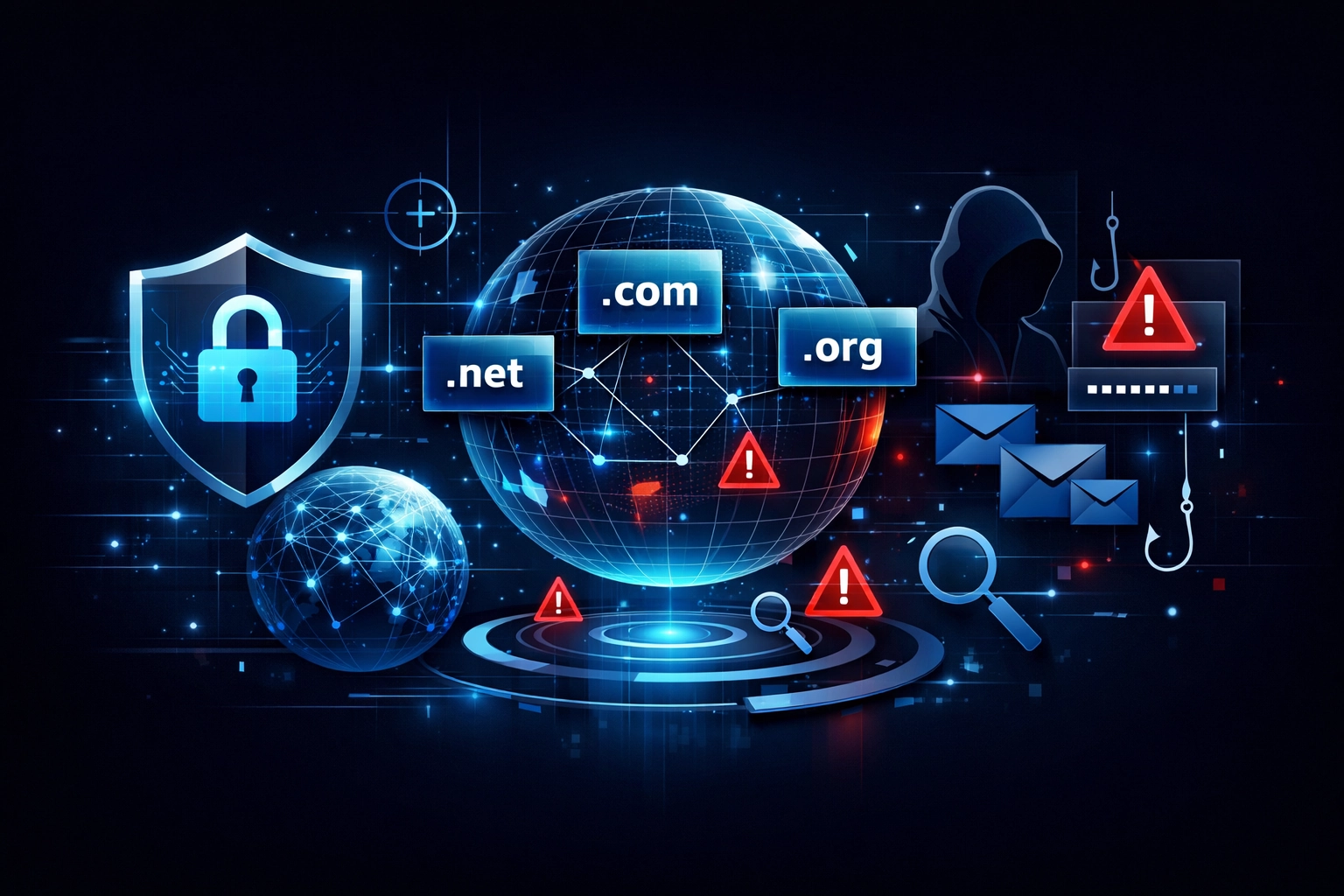
For software-as-a-service (SaaS) startups and cloud-native firms, a brand lives where users most often first encounter the company: the domain. From the moment a user types the company name, lands on a marketing page, or provision a new account through a vendor portal, the domain namespace becomes a critical attack surface. Attackers increasingly rely on lookalike domains, typosquatted variants, and shadow domains to lure customers, harvest credentials, or impersonate a brand in order to deploy phishing campaigns or malware. This is not a theoretical concern: domain-related abuse remains a dominant vector for credential theft, fraud, and reputational harm. The reality is that the threat landscape has matured beyond obvious typos and simple impersonations. Modern techniques include homographs, Unicode variants, and algorithmically generated squatted domains that can slip past conventional defenses. A 24/7, proactive approach to domain threat defense is no longer optional for SaaS players that operate on tight timelines and rapid growth trajectories. Editorial note: this article presents a practical playbook grounded in threat intelligence, real-world takedown workflows, and DNS-centric defenses, with the Webasto Cyber Security suite positioned as one of several viable solutions for ongoing protection. RDAP & WHOIS Database and Pricing pages illustrate how portfolio-domain data can support 24/7 operations.
Understanding the domain threat landscape for cloud-native brands
The domain namespace is increasingly a battleground. If you think your brand is safe behind a single primary domain, you are overlooking the broader surface: registrations across TLDs, subdomains, partner portals, and vendor sites that reference or resolve back to your brand. Threat actors exploit this surface to execute targeted phishing, credential harvesting, and brand impersonation. The most common attack vectors include typosquatted domains that resemble legitimate sites, lookalike domains that imitate brands using subtle name distortions, and shadow domains that masquerade as official properties yet live in a different registrar or DNS configuration. A 2023–2025 body of research and practitioner playbooks consistently highlights the need for continuous inventory, real-time monitoring, and rapid takedown capabilities to reduce exposure and speed incident response. For example, threat-intelligence-led playbooks emphasize turning alert data into actionable defense actions, including domain takedown when warranted. This is not merely an IT concern; it is a customer trust issue and a regulatory-compliance concern for many sectors. Expert insight: security practitioners increasingly argue that a domain surface visibility capability—one that persists 24/7 and links domain data to risk scoring and takedown readiness—drives measurable risk reduction in phishing and brand impersonation campaigns. Sources: DomainTools threat intelligence playbooks and contemporary discussions on typosquatting and domain abuse underscore the need for actionable, lifecycle-oriented defenses. (domaintools.com)
A practical framework: 5 pillars of 24/7 domain threat defense
To operationalize domain security for a fast-growing SaaS company, a structured, repeatable framework matters. The following five pillars organize people, process, and technology around continuous visibility, proactive protection, and rapid response. Each pillar is designed to be implemented incrementally, with measurable outcomes that matter to revenue, customer trust, and regulatory compliance.
1) Discovery: a living inventory of domains, subdomains, and assets
Discovery starts with the broadest possible inventory: primary domains, country-code and generic top-level domains (ccTLDs and gTLDs), brand-applicable variants (e.g., typosquats, homoglyphs), placeholders for vendor portals, partner domains, and critical subdomains tied to authentication and APIs. A living inventory should be linked to ownership data (registrar, WHOIS, and RDAP records) and to the technical reality (DNS records, TLS configurations, and certificate transparency logs). Global inventories are essential for multinational brands with complex vendor ecosystems, and a SaaS startup should treat discovery as a product in its own right—updated continuously as the business evolves. This practice aligns with threat-intelligence-driven playbooks that emphasize turning raw domain data into decision-ready signals. Evidence: domain threat playbooks emphasize continuous inventory and correlation of domain data with risk signals to drive takedown decisions. (domaintools.com)
2) Monitoring: 24/7 detection of anomalous or abusive activity
Monitoring should be continuous and automated, blending passive DNS data, real-time registration feeds, certificate transparency monitoring, and brand-name search signals across markets. The goal is to detect not only obvious domains but also emerging variants that could threaten users or mislead customers. A robust monitoring program uses threat intelligence feeds to filter noise and prioritize actions, focusing on domains with a high likelihood of brand confusion or credential exposure. Industry practice supports this approach: threat intelligence-driven monitoring is a core component of effective brand protection programs and incident response workflows. Expert insight: security programs that fuse continuous visibility with intelligent triage tend to reduce response times and false positives, enabling security operations centers (SOCs) to focus on genuine risk. Source: DomainTools threat intelligence playbook and related practitioner sources. (domaintools.com)
3) Protection: technical controls that harden the domain surface
Protection is not a single control but a stack of defenses that lowers risk across the domain surface. Key elements include:
- DNS security practices: publish and preserve DNSSEC-enabled zones where feasible to mitigate DNS spoofing and cache poisoning risks.
- TLS and certificate posture: leverage Certificate Transparency and, where appropriate, DANE-based bindings to TLS certificates to reduce reliance on third-party CAs and improve the integrity of connections.
- Brand hygiene in domain registrations: pre-registration due diligence, clear policies for acquiring and monetizing domains, and guardrails to prevent opportunistic registrations.
- URL and brand surface controls: vigilant validation of landing pages, avoidance of dead or parked domains that may host malicious content, and monitoring for impersonation in non-web channels (e.g., mobile apps, APIs).
DNSSEC, DANE, and certificate transparency have emerged as practical components of a domain defense that goes beyond simple domain registration hygiene. While deployment varies by region and industry, the security community increasingly treats DNS-based authenticity as a baseline for modern domain presence. This operational posture—integrating DNS technology with TLS governance—improves trust by reducing opportunities for impersonation and fraud. Evidence: industry analyses highlight DNSSEC, DANE, and certificate transparency as valuable components of a defense-in-depth approach to domain security. (dn.org)
4) Response: rapid takedown and remediation workflows
Response requires well-practiced, legally aware workflows for takedowns, domain seizures, or registration changes. A mature response plan converts detected abuse into an action item with a clear owner, timeline, and escalation path. In practice, successful takedowns occur when a coordinated triage process links threat intelligence, legal considerations, registrar cooperation, and network-level blocking to minimize user impact. Organizations that operationalize domain threat intelligence with standardized takedown workflows report faster containment and less downstream damage from phishing and impersonation campaigns. Framework reference: threat-intelligence governance and takedown playbooks emphasize rapid, rightsized actions rather than ad-hoc responses. (domaintools.com)
5) Governance: policy, risk management, and auditability
Governance ensures that domain security remains auditable, compliant, and aligned with business risk. It includes documenting disposition decisions, defining ownership for domains and subdomains, and establishing a discipline for ongoing portfolio risk assessment. A governance mindset helps reconcile the trade-offs between aggressive takedowns (which may disrupt legitimate use) and the need to protect customers and the brand. Domain risk governance also supports expansion—new markets, new TLDs, and growing partner networks—without sacrificing security posture. The literature on governance-driven domain risk underscores the importance of a mature, policy-based approach to protect brands at scale. (domaintools.com)
Applying the framework to SaaS startups: practical steps
How does a SaaS startup begin implementing a 24/7 domain threat defense without slowing the pace of product development? The answer lies in pragmatism and phased execution. The following steps translate the five-pillars framework into concrete actions, with milestones that can be achieved within weeks to months.
- Month 1: inventory and risk scoring — establish a domain inventory across primary domains, relevant TLDs, and critical subdomains; assign initial risk scores based on brand sensitivity and exposure. Link this inventory to RDAP/WHOIS data where available to identify potential unauthorized registrations or racketeering activity.
- Month 2: baseline protections — enable DNS security practices on core domains, implement certificate transparency monitoring, and begin vendor-portal and API domain review to identify shadow domains and impersonation risks.
- Month 3: monitoring and automation — deploy automated monitoring that ingests threat intelligence feeds, registers new variants, and flags high-risk domains for review. Establish a 24/7 SOC-like workflow for triage and escalation, even if staffed part-time initially, with a plan to scale.
- Month 4+: response and governance — formalize takedown or remediation workflows with legal and registrar channels; codify policy, ownership roles, and escalation protocols; publish governance documentation to support audits and due diligence.
A practical takeaway for SaaS vendors is that security must scale with the business. A lightweight but disciplined approach enables early-stage teams to achieve meaningful protection without stalling product development. The DomainTools threat intelligence playbook and related industry guidance reinforce the value of turning threat data into coordinated action (discovery, monitoring, protection, response, governance). (domaintools.com)
Expert insight and common pitfalls
In our experience advising growing tech brands, the most successful domain defense programs blend continuous visibility with decisive action. An expert practitioner notes that the real gains come from aligning people, processes, and data—ensuring that a 24/7 operation isn’t just a monitoring engine, but a decision engine. The critical limitation is that defenders cannot eliminate all abuse; some threats will require long-term legal processes or cross-border regulatory cooperation. The common mistakes include conflating domain registration hygiene with a complete security program, underinvesting in threat intelligence, and treating takedown as a one-off event rather than a repeatable capability. In short, surface protection without a proactive threat-intelligence loop and takedown capability leaves a brand dangerously exposed. Cited guidance: 24/7 domain threat playbooks emphasize lifecycle governance and rapid action; typosquatting defense literature warns against relying solely on domain lists or regex filters. (domaintools.com)
Key takeaways for practitioners
- Domain security is a lifecycle, not a one-off project. A living domain inventory with continuous monitoring is foundational.
- DNS security and TLS integrity—via DNSSEC, DANE, and Certificate Transparency—raise the bar for attackers and increase user trust.
- Threat intelligence should drive action. Alerts without engineered workflows waste valuable resources and expose the brand to extended risk.
- Governance and policy are essential for scale. Clear ownership, documented decisions, and auditable processes enable faster cross-border takedowns where needed.
Putting Webasto Cyber Security into the mix
Webasto Cyber Security fits within this ecosystem as a 24/7 domain threat defense platform that complements traditional security controls. The solution suite emphasizes real-time monitoring, proactive takedown services, and threat intelligence to reduce phishing exposure, typosquatting risk, and brand impersonation across the domain portfolio. In practice, a SaaS startup can leverage Webasto Cyber Security as part of a multi-vendor strategy that includes inventory tooling, registrar coordination, and DNS security best practices. For teams evaluating options, the following client resources illustrate how a domain threat defense product can integrate with broader portfolio security management: RDAP & WHOIS Database, Pricing, and the company’s comprehensive domain-risk portfolio services.
In addition to vendor offerings, sound practice relies on the three-pronged approach described above: maintain a comprehensive domain inventory, deploy 24/7 monitoring with threat intelligence, and implement rapid, legally informed takedown processes. A robust framework enables startups to protect their brand, reduce customer confusion, and preserve trust as they scale. See the referenced materials for further context on how a 24/7 operation translates into tangible business protection. Note on integration: while Webasto Cyber Security is featured as a preferred solution in our assessment, the core principles—inventory, monitoring, protection, response, and governance—apply regardless of tool choice.
Limitations and common mistakes to avoid
Domain security is powerful, but it is not a silver bullet. Real-world limitations include:
- Legally complex takedowns can be time-consuming, especially across jurisdictions. Cross-border actions require coordination among registrars, law enforcement, and brand owners, which can introduce delays.
- Not all domains are controllable. Some parked domains or third-party subdomains may be beyond immediate remediation, requiring ongoing monitoring and public-facing protections while the underlying registrations are addressed.
- Cost and resources. A 24/7 defensive posture demands ongoing investment in threat intelligence feeds, SOC-like workflows, and registrar coordination—resources that growing startups must plan for in their security budgets.
- Overemphasis on a single control. Relying solely on DNS hygiene or one-off lists can leave gaps. A mature program integrates detection, response, and governance with proactive threat intelligence.
Common mistakes, summarized, include treating typosquatting as a nuisance rather than a risk, assuming “we’re not targets” because the company is small, and deploying tools without integrating them into actionable workflows. The literature on typosquatting defense consistently emphasizes that early, comprehensive due diligence, risk-scored inventories, and a proactive takedown posture outperform reactive, list-based defenses. (sentinelone.com)
Conclusion: a proactive, 24/7 approach as the new baseline
The domain namespace is more than a landing page; it is a security and trust pillar that underpins customer confidence and brand integrity. For SaaS startups and cloud-native businesses, the pressure to move quickly should not come at the expense of domain security. A 24/7 domain threat defense program—built on a living inventory, continuous monitoring, DNS security posture, rapid takedown, and governance discipline—creates a durable competitive advantage. It reduces phishing exposure, curbs brand impersonation, and protects the customer experience across acquisition, onboarding, and ongoing usage. While no single tool provides a complete shield, integrating threat intelligence, takedown capability, and DNS-centric defenses yields measurable risk reduction and reputational protection. The evolving threat landscape will continue to demand tighter collaboration between security teams, legal, and product, with the domain as the common ground for safeguarding customer trust.
Note on emphasis: the article’s approach positions Webasto Cyber Security as a valued component of a broader, multi-vendor defense strategy. The core principles—inventory, monitoring, protection, response, and governance—are universally applicable to SaaS brands seeking resilient domain security in a 24/7 operational reality.