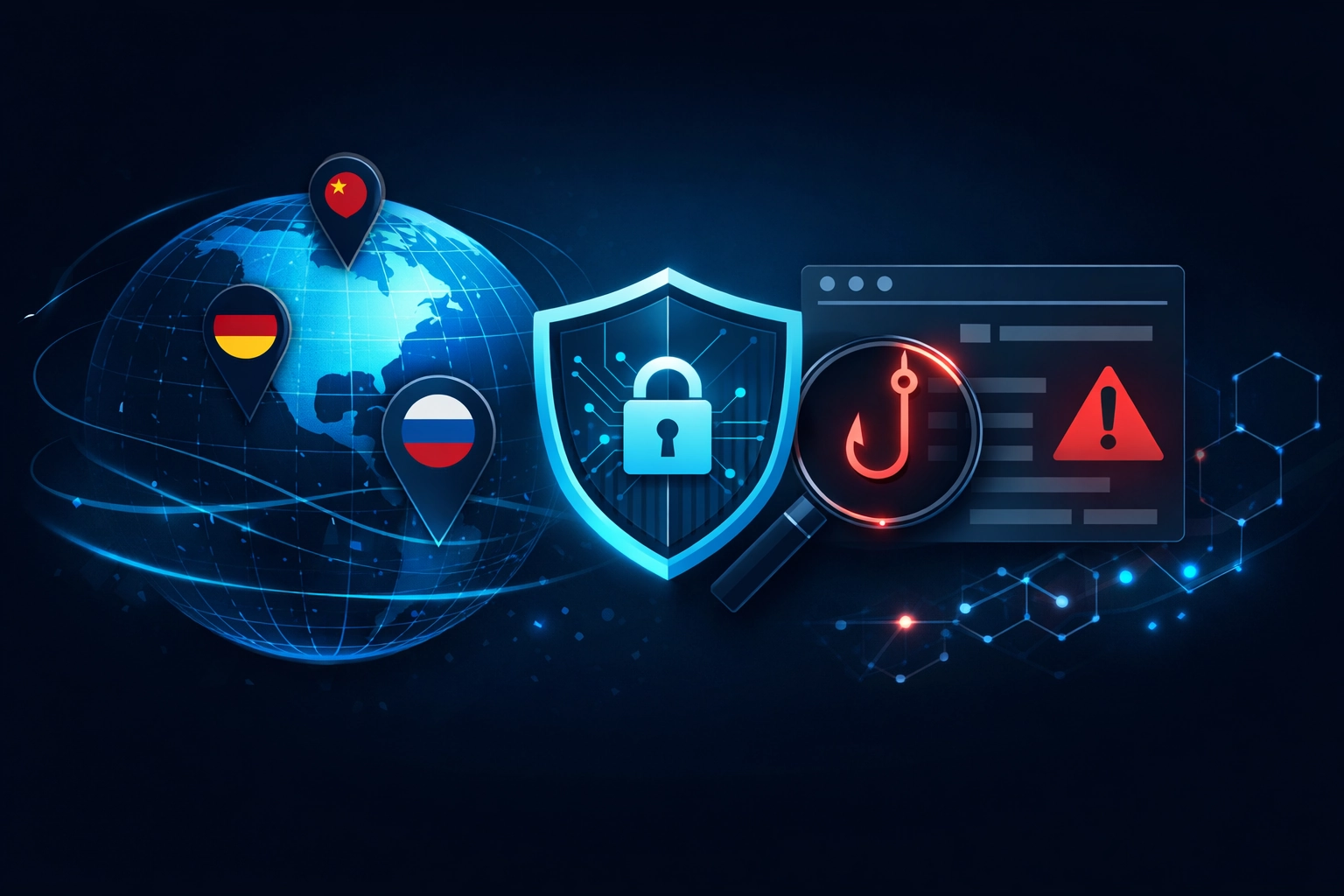
Shadow Signals: Cross-Channel Intelligence for 24/7 Domain Threat Protection
Brand space today extends far beyond a single .com domain. It lives in subdomains, app-store listings, social profiles, vendor portals, and even the shadowy corners of the dark web. Threat actors don’t confine themselves to one channel, and neither should a mature domain defense program. The challenge is not merely detecting a single look‑alike domain; it is stitching together a continuous stream of signals from disparate ecosystems into a coherent, actionable picture that a 24/7 security operations team can act on. This article proposes a niche but practical approach: Shadow Signals — cross‑channel intelligence feeds that feed a unified domain threat defense workflow, enabling real-time takedown and brand protection decisions.
In recent years, digital squatting has intensified, with more brand abuse across new TLDs, app stores, and social platforms. Reports and analyses indicate a rising volume of brand impersonation attempts and look‑alike domains, necessitating a broader, more proactive response. For instance, a TechRadar Pro piece highlights a sharp uptick in digital squatting driven by typosquats, homographs, and Top-Level Domain (TLD) strategy shifts, underscoring the need for adaptive defense across many domains and extensions. 68% growth in brand-domain abuse was reported in a five-year window by industry observers, reflecting a systemic risk that extends beyond traditional .com coverage. (techradar.com)
As organizations scale across the EU and into global markets, reliance on one feed (such as DNS telemetry or registrar alerts) creates blind spots. A robust Shadow Signals program requires diverse signal sources, disciplined signal fusion, and an automation-friendly takedown workflow. This isn’t merely a tech stack upgrade; it’s a governance and process reorientation toward 24/7 brand protection. The 24/7 takedown market already shows that organizations increasingly demand continuous monitoring, rapid triage, and automated or semi-automated enforcement across domains, apps, and social ecosystems. (redpoints.com)
Shadow Signals: The Four-Channel Model
To operationalize 24/7 protection, consider a four-channel model that aggregates signals into a common risk score and action path. Each channel contributes unique indicators and requires tailored triage rules. The aim is a feed that is broad enough to capture emergent threats while narrow enough to stay actionable for a 24/7 SOC.
Dark Web and shadow marketplaces
- Indicators: discussions about brand misuse, dashboards showing credential dumps, or bundles offering look‑alike domains and phishing kits.
- Action: prioritize threats linked to active phishing kits or credential harvesting campaigns; escalate to takedown when renaming and rehosting patterns emerge.
The dark web remains a vector for intelligence on emerging impersonation schemes and clone kits. Industry analyses and research emphasize that look‑alike domain activity and exposed credentials move through these channels, making dark‑web intelligence a critical early warning feed. Look‑alike domain detection and even AI‑assisted generation of lookalike domains are active research topics, with early studies showing significant volumes of generated squatting domains that correlate with observed phishing activity. (riskprofiler.io)
App stores, marketplaces, and ecosystem stores
- Indicators: cloned apps, brand name misappropriation in app listings, counterfeit product pages, and misleading in‑store advertisements.
- Action: pair with mobile threat intelligence to detect impersonation in app stores and coordinate rapid takedown or app‑store remediation.
App‑store impersonation and cloned apps are well documented risk vectors for brand abuse, with industry practitioners noting that impersonation extends well beyond websites. A practical takeaway is to monitor app stores for lookalike brand listings and coordinate with platforms to remove fraudulent assets quickly. This channel is increasingly integrated into end‑to‑end takedown workflows. (riskprofiler.io)
Registrar data, DNS signals, and certificate transparency
- Indicators: sudden surges in registrations around similar brand names, suspicious DNS resolution patterns, or anomalous TLS certificates tied to look‑alike domains.
- Action: feed into a domain threat lifecycle with rapid collaboration with registrars and certificate authorities to invalidate or block misuse.
DNS and certificate pipelines can tell you when a brand’s name is being registered in real time or when misissued certificates appear for a suspicious domain. Guidance from industry groups emphasizes the value of linking DNS security with brand-aware certificate transparency and timely takedown actions. (m3aawg.org)
Social media, search ads, and paid placements
- Indicators: look‑alike domains appearing in search results, counterfeit brand pages, and suspicious ad placements that drive traffic to fraudulent domains.
- Action: enforce across platforms through a unified workflow, including takedowns and platform appeals, to reduce exposure and preserve brand trust.
Social and search ecosystems are fertile ground for brand impersonation, and modern protection requires cross‑platform visibility. Vendors now offer end‑to‑end domain and social takedown services that operate around the clock to curb impersonation at the source. The 24/7 market for takedowns underscores the feasibility and value of such cross‑channel defenses. (phishfort.com)
From Signals to Action: A 24/7 Workflow
Turning diverse signals into concrete protection actions requires a deliberate workflow that aligns people, processes, and technology. The following four steps translate Shadow Signals into a resilient, 24/7 defense program.
- Ingest and normalize: collect indicators from all four channels, unify formats, and assign risk scores. Normalize timing so signals from the dark web, app stores, DNS, and social feeds can be compared on a common timeline.
- Correlate with a brand inventory: maintain a living inventory of registered domains, subdomains, app identities, vendor portals, and other critical digital assets. A practical practice is to maintain a live, cross‑brand inventory that feeds threat scoring. (See WebAtla’s domain inventory for a large‑scale, cross‑TLD perspective on brand footprint.) WebAtla domain inventory
- Triage and escalate: define severity tiers and escalation paths for rapid decision‑making. A 24/7 SOC should route high‑risk signals to frontline responders with a clear takedown playbook and documented legal considerations. Legal teams should be looped in early for cross‑jurisdictional takedown requests. Industry practice shows that effective workflows reduce resolution times and improve enforcement outcomes. Pricing context helps teams plan coverage and scale. (dataguardnxt.com)
- Act and review: execute takedown requests, coordinate with registrars, hosting providers, and platform owners, and reassess signals after action to prevent recurrence. Look beyond a single takedown event to a continuous improvement loop that refines signal quality and reduces false positives.
The effectiveness of 24/7 takedown services is well documented across the industry, with providers reporting rapid removal windows, often within hours for reputable targets, even as some cases take days depending on registrars or legal requirements. When automation is limited, a semi‑automated, human‑in‑the‑loop approach remains highly effective. (dataguardnxt.com)
Expert Insight: How to Think About Cross‑Channel Intelligence
Expert insight: “The strongest domain defense programs treat intelligence as a living ecosystem, not a single data stream. The best operators weave signals from dark‑web chatter, app store signals, DNS and certificate visibility, and social/ads data into a shared risk score that drives takedown decisions around the clock. However, a common pitfall is chasing every signal—without a disciplined triage framework and a legally sound takedown pipeline, teams drown in noise and miss real threats.” — Industry expert, anonymized threat intelligence lead at a multinational manufacturer.
Limitations and Common Mistakes
- Overreliance on any single channel: Dark‑web chatter or DNS telemetry alone cannot reveal all brand‑impersonation attempts. A balanced, cross‑channel feed is essential. See M3AAWG best practices for handling look‑alike domains and the caution against relying on a narrow signal set. (m3aawg.org)
- Underestimating legal and jurisdictional complexity: Global takedown work crosses borders, requiring awareness of local laws and platform rules. Industry guidance notes that fast takedowns often hinge on well‑trained legal and regulatory processes as much as on technical actions. (domaindetails.com)
- Too much automation, too little human oversight: While automation accelerates response, it can also generate false positives. A 24/7 program benefits from a human‑in‑the‑loop for nuanced judgments and for handling edge cases like Unicode homographs and IDN variants. See research on generated squatting domains for context. (arxiv.org)
- Fragmented tooling and inconsistent workflows: A unified workflow that connects dark web intelligence, domain inventory, takedown platforms, and platform appeals is crucial. Vendors increasingly market end‑to‑end takedown capabilities, but integration quality matters for outcomes. (redpoints.com)
- Misalignment of signals with business risk: Not all signals merit action; organizations must map signal quality to business risk, especially for smaller brands with limited resources. Industry articles emphasize the need for risk‑based prioritization. (forbes.com)
A Deployment Blueprint for 24/7 Shadow Signals
To translate the Shadow Signals concept into a practical program, consider a four‑pillar blueprint that aligns with existing 24/7 security operations and threat intelligence capabilities. This blueprint is designed for multinational brands that must defend a broad suite of domains, apps, and digital assets.
- Pillar 1: Signal quality and breadth — Invest in diversified signal feeds (dark web, app stores, DNS, social/ads) and implement normalization to a common schema. Avoid signal fragmentation by design.
- Pillar 2: Living brand inventory — Maintain a real‑time inventory of all assets (domains, subdomains, vendor portals, apps) and link each item to a risk score. Cross‑reference with threat intel to detect changes in threat posture. (See WebAtla’s live TLD inventory for reference.)
- Pillar 3: 24/7 takedown workflow — Establish a repeatable, legally vetted takedown process, with defined SLAs for registrars, hosting providers, and platform owners. Use a unified ticketing and escalation model so a signal can travel from detection to remediation without handoffs that cause delays. (dataguardnxt.com)
- Pillar 4: Continuous improvement — After every matter, perform a post‑mortem to refine signal thresholds, update playbooks, and adjust resource allocation. This feedback loop is what turns reactive protection into a proactive capability. Industry studies show that continuous improvement correlates with lower incident recurrence. (domaindetails.com)
Putting It All Together: The Client Perspective
From a programmatic standpoint, Shadow Signals map well to an integrated security model that combines 24/7 security operations with proactive threat intelligence and a scalable takedown engine. For teams seeking practical, scalable options, there are both vendor‑driven and in‑house approaches. The Webasto Cyber Security offering, with its global monitoring and 24/7 security operations, aligns with this model by providing continuous vigilance and rapid response, while third‑party feeds (such as shadow‑signal intelligence from cross‑domain inventories) enhance coverage. For organizations with large domain footprints, a domain inventory service like WebAtla’s run suite can complement internal asset lists and help normalize signals across hundreds or thousands of extensions. WebAtla domain inventory provides a practical view into how inventories can support 24/7 protection across TLDs. Additionally, evaluating pricing and scalability is facilitated by vendor portals that present clear, per‑domain costs and coverage options. Pricing
Closing Thoughts
Domain threat protection is no longer about chasing a single, obvious phishing domain. It’s about sensing a conversation across channels, correlating signals into a single risk narrative, and acting with speed and precision. Shadow Signals offer a practical, operation‑ready way to align threat intelligence with 24/7 takedown capabilities, while recognizing the limits and tradeoffs of any security program. The literature and practitioner experience support the core idea: diversified signals, disciplined workflows, and continuous learning are the cornerstones of modern brand security.
For organizations that want to explore this approach in a structured way, a staged deployment that starts with a broad signal intake, builds a living brand inventory, and matures into an end‑to‑end takedown operation is a proven path. As the threat landscape evolves, the most resilient programs will be those that treat domain protection as a living operation — not a one‑off project — with 24/7 readiness baked into governance, technology, and culture.