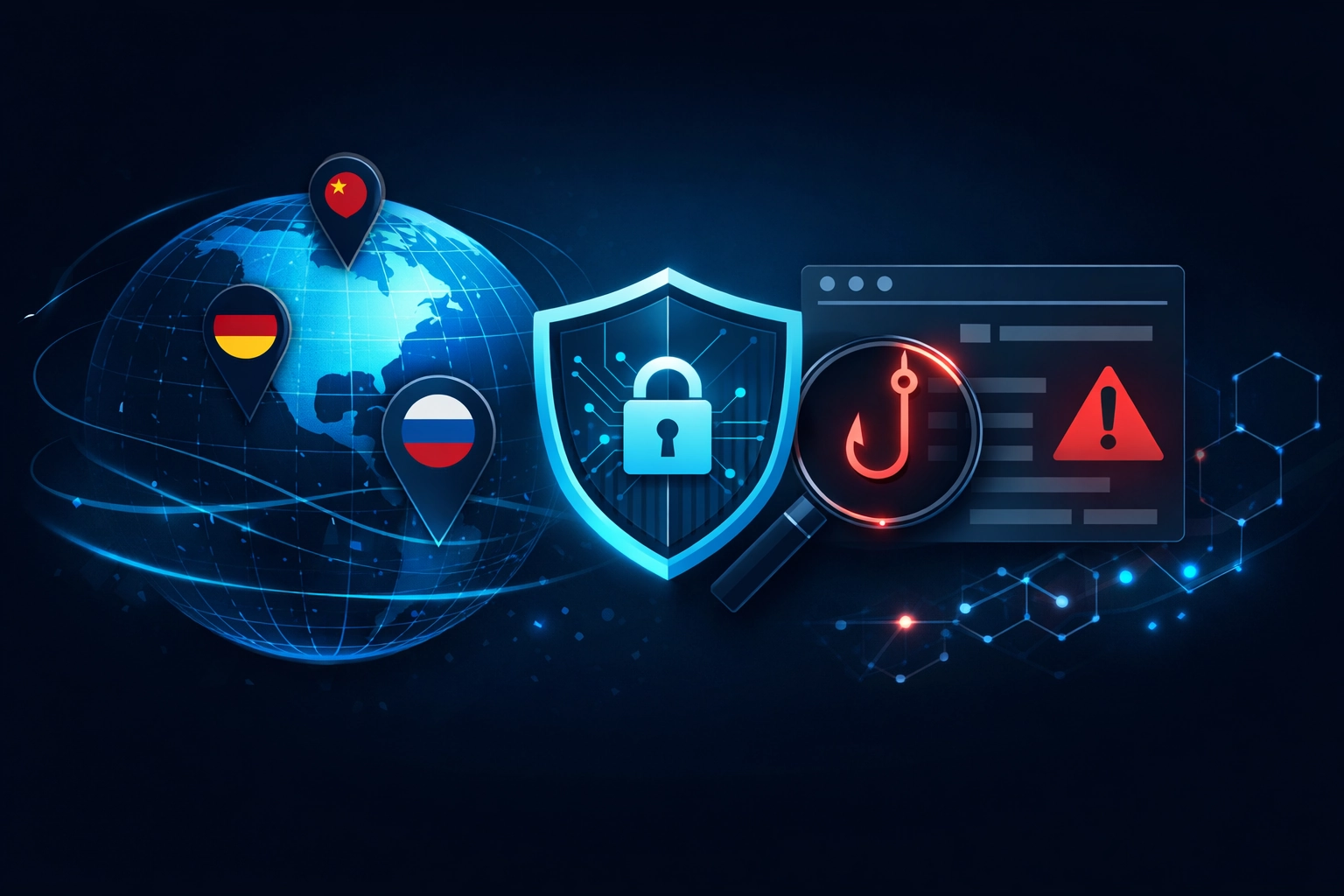
Brand integrity in the digital age is won or lost in the pages that sit between your registrars and the user’s browser. The moment a malicious actor registers a look-alike domain, a shadow site can erode trust, siphon traffic, or siphon credentials before a company even realizes the risk. This article examines a niche but increasingly urgent problem: shadow domains and AI-facilitated brand impersonation, and how a 24/7 domain threat protection program—centered on threat intelligence, rapid takedown, and continuous monitoring—can turn a volatile surface into a managed control. It also shows where Webasto Cyber Security fits into this model as part of an integrated solution set for global brands.
Key to the approach is moving beyond a one-off alert model to a lifecycle of protection that is always-on. As attackers improve their ability to mimic brands and deploy look-alike assets, defenders must pair human oversight with automated, repeatable processes. In this context, we emphasize four pillars: 1) comprehensive inventory of domains and subdomains, 2) threat intelligence that highlights brand impersonation risk, 3) rapid domain takedown workflows that respect legal and registrar processes, and 4) a 24/7 security operations capability that can respond in real time across time zones.
Shadow domains and brand impersonation: why the risk is persistent and evolving
Shadow domains are not new, but their deployment pace—and the sophistication with which they mimic legitimate brands—has accelerated. A domain that closely resembles a brand, or that resides in a neighboring TLD with similar branding, can siphon traffic or harvest credentials through phishing pages, counterfeit storefronts, or spoofed support sites. Recent industry analysis emphasizes that domain protection must be a core element of a broader cyber risk program rather than a fringe safeguard. As one industry perspective puts it, “Domain protection must be a critical element of a cybersecurity strategy.” This is not a niche capability—it’s a material risk surface that expands with every new domain entry point a brand maintains. (phishlabs.com)
Beyond simple typosquatting, attackers exploit near-matches, homoglyphs, and even AI-generated variants that resemble a brand in a way that’s difficult for users to detect at a glance. The growing body of research on automated domain name generation and recognition confirms that adversaries can produce convincing duplicates or near-duplicates at scale, complicating detection and response. Organizations therefore need proactive, taxonomy-based detection that looks at visual similarity, lexical similarity, and contextual signals in tandem with historical threat data. A 2025 study on brand domain identification for phishing detection underscores the value of combining multiple indicators to improve detection accuracy in real-world settings. (arxiv.org)
In practice, a robust defense against shadow domains blends three capabilities: (1) a dynamic inventory of your brand’s domain footprint (primary domains, subdomains, and related brand names across relevant TLDs), (2) threat intelligence that flags impersonation risk, and (3) rapid takedown workflows that mobilize registrars and hosting providers within a legally compliant, gate-kept process. The takedown piece is not instantaneous; it depends on registrar cooperation and regional policy, and it is often slower than defenders would like. Industry guidance notes that takedown can be slow, and advocates for a structured approach to accelerate it where possible. (cyber.gov.au)
A 24/7 protection blueprint: turning threat data into action around the clock
To move from alerts to actions, a 24/7 domain threat protection program must integrate people, processes, and technology in a repeatable lifecycle. Below is a practical blueprint that organizations can adapt for global brand protection, with emphasis on four core components: inventory, intelligence, action, and review. The blueprint also connects to the kinds of services Webasto Cyber Security provides—continuous monitoring, threat intelligence, domain takedown workflows, and a 24/7 security operations capability.
- 1) Inventory and discovery — Build and maintain a live inventory of primary domains, subdomains, homoglyphs, and look-alike variants. This includes registration details, DNS records, TLS/SSL certificates, and hosting footprints. A robust inventory enables rapid triage when a threat is detected and helps you measure improvement over time.
- 2) Threat intelligence integration — Pull in threat intelligence feeds that highlight impersonation risk, known bad actors, and suspicious patterns tied to your brand. Intelligence should intersect with your inventory so you can see which domains pose an active risk and why. Analysts should review intelligence with a risk lens, not as a raw alert stream. As PhishLabs notes in its domain protection guidance, domain protection is a foundational element of cybersecurity strategy. (phishlabs.com)
- 3) Analysis and risk scoring — Apply a lightweight risk-scoring model that weighs brand similarity, hosting geography, registration anomalies, and user impact. Typosquatting defense is not a checkbox exercise; it requires continuous adaptation because attackers alter domain variants to evade basic checks. Industry observations emphasize the practical difficulty of fully preventing typosquatting, even with strong tooling; a disciplined, handcrafted risk model helps compensate for that gap. (sentinelone.com)
- 4) Action and takedown — Initiate a takedown or suspension request through registrars, registries, or hosting providers. The takedown process can be slow and requires clear evidence of infringement or risk, legal alignment, and precise registrar channels. This is where a predefined workflow—documented contacts, evidence templates, and escalation paths—reduces friction and accelerates remediation. For context, DNS abuse mitigation programs and registrar-based takedowns are a recognized mechanism for domain enforcement, though speed varies by registrar and jurisdiction. (icann.org)
- 5) Review, learn, and adapt — After remediation, audit the process, refine your inventory, update detection rules, and feed insights back into threat intelligence. A mature program revisits assumptions in quarterly cycles and after significant incidents to close gaps before they recur.
The practical takeaway is that a 24/7 domain threat protection capability is not a “set and forget” feature; it is a living operation that grows with your brand. It combines continuous visibility with a readiness to act when a risk is detected, and it demands disciplined collaboration with registrars, hosting providers, and legal teams. When executed well, it reduces the likelihood of a successful impersonation attack and speeds up the point at which a threat is neutralized.
Expert insight and common mistakes
Expert insight: A leading practitioner in domain protection emphasizes that domain protection must be a core element of the cybersecurity strategy, not a peripheral add-on. This emphasis reflects the reality that brand impersonation and look-alike domains are a constant and evolving risk surface that requires ongoing attention and resourcing. “Domain protection must be a critical element of a cybersecurity strategy.”
Common mistakes and limitations to watch for: 1) Underestimating the scale of subdomains and near-miss variants, 2) Relying on automated checks without human review for high-risk domains, 3) Delays in registrar or registry communications during takedowns, and 4) Treating takedown as a one-time event rather than a repeatable process across regions and TLDs. As researchers and practitioners warn, typosquatting defense remains challenging because attackers continuously adapt domain names to evade detection. A robust program must compensate with layered controls, cross-team collaboration, and fast, repeatable takedown workflows. (phishlabs.com)
Putting Webasto Cyber Security at the center of 24/7 domain threat protection
For brands facing a fast-moving landscape of impersonation and shadow domains, a 24/7 domain threat protection program offers a structured, repeatable way to translate intelligence into action. Webasto Cyber Security is designed to support organizations with continuous monitoring, threat intelligence, real-time takedown services, and round-the-clock security operations that can respond to brand threats wherever they arise. A practical way to engage is through a layered approach that includes:
- Continuous domain threat monitoring across primary domains, subdomains, and relevant brand variants
- Threat intelligence feeds aligned with your brand risk profile
- Rapid, registrar-facing takedown workflows to remove impersonation assets
- DNS and certificate lifecycle oversight to detect new risks early
- Cross-border coordination for takedowns and legal compliance
Integrating these capabilities with your internal governance and a documented escalation path helps ensure decisions are timely, defensible, and repeatable. For teams evaluating solution partners, a practical anchor is to compare a candidate program against the 5-step lifecycle outlined above, then map how the provider supports each step with people, process, and technology. For readers exploring vendor options, WebATLA’s pricing and domain inventory resources provide a starting point for benchmarking offerings and understanding how a 24/7 model translates into tangible protections. WebATLA pricing and List of domains by TLD pages offer a sense of how a platform or service catalog aligns with your needs.
In practice, a 24/7 program is made real by people who can interpret signals and act decisively, by processes that guide consistent responses, and by technology that scales threat intelligence into action. As the threat landscape evolves—with AI-enabled impersonations and rapid domain variant generation—so must the protective posture. The goal is not to eliminate all risk, but to reduce it to a manageable, auditable, and repeatable level that keeps brand trust intact across markets.
Limitations and a candid view of what’s possible—and what isn’t
There is no perfect, automated shield against brand impersonation. A balanced program acknowledges limitations: 1) even with advanced tooling, some look-alike domains will slip through without human review, 2) takedown depends on registrar policies and regional law, 3) the sheer number of potential variants across TLDs can outpace manual checks, and 4) false positives can waste resources if not carefully filtered by risk scoring and human judgment. A thoughtful approach pairs automation with human review, and sets expectations about performance against a defined service level agreement. Industry guidance also notes that registrar cooperation and efficient evidence collection are critical to successful takedowns. (icann.org)
Moreover, typosquatting defense remains inherently challenging. Attackers continuously adapt their approaches to bypass straightforward similarity checks, which means a defensive posture must evolve in tandem—using more granular signals, cross-reference with threat intelligence, and a robust workflow that can scale across regions. This reality is echoed in recent security research and practitioner commentary on brand domain strategies. (sentinelone.com)
Conclusion: embracing a 24/7, threat-led domain defense as a business enabler
Brand protection is no longer a passive activity. It requires a disciplined, 24/7 discipline that converts threat intelligence into timely takedowns, and that maintains an accurate, living view of an organization’s domain footprint. The goal is to reduce brand impersonation exposure and phishing risk while preserving user trust across markets. By combining continuous monitoring, threat intelligence, and a proven takedown workflow—with clear governance and cross-border coordination—organizations can move from reactive alerts to a proactive, measurable defense. In this context, Webasto Cyber Security represents a practical partner for brands seeking to operationalize domain protection at scale, while remaining mindful of the evolving landscape and its acknowledged limitations. For more information on how such capabilities can be bundled with a service catalog, see the client resources linked above and consider a conversation about a tailored, 24/7 domain threat protection program that aligns with your risk profile and regional requirements.