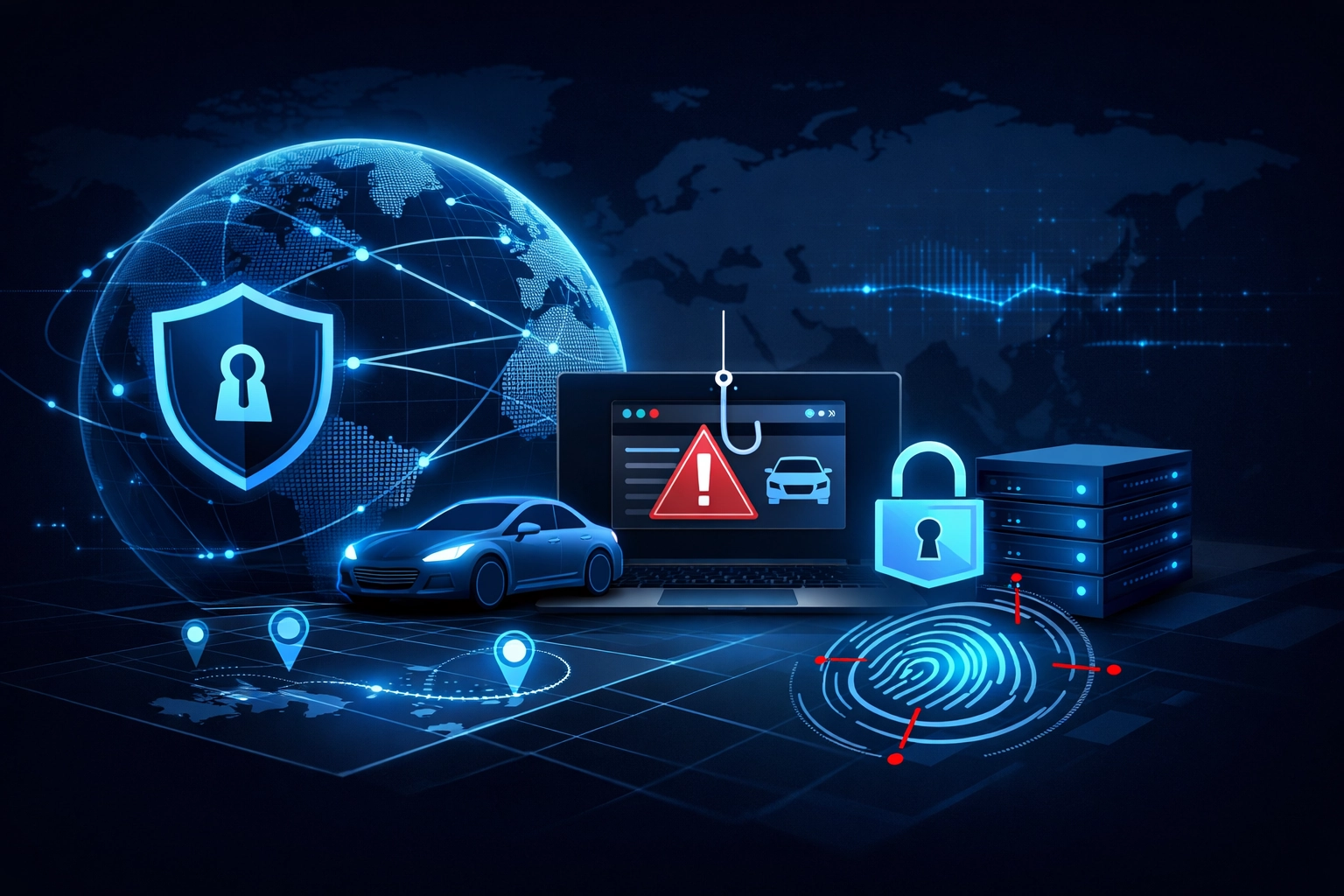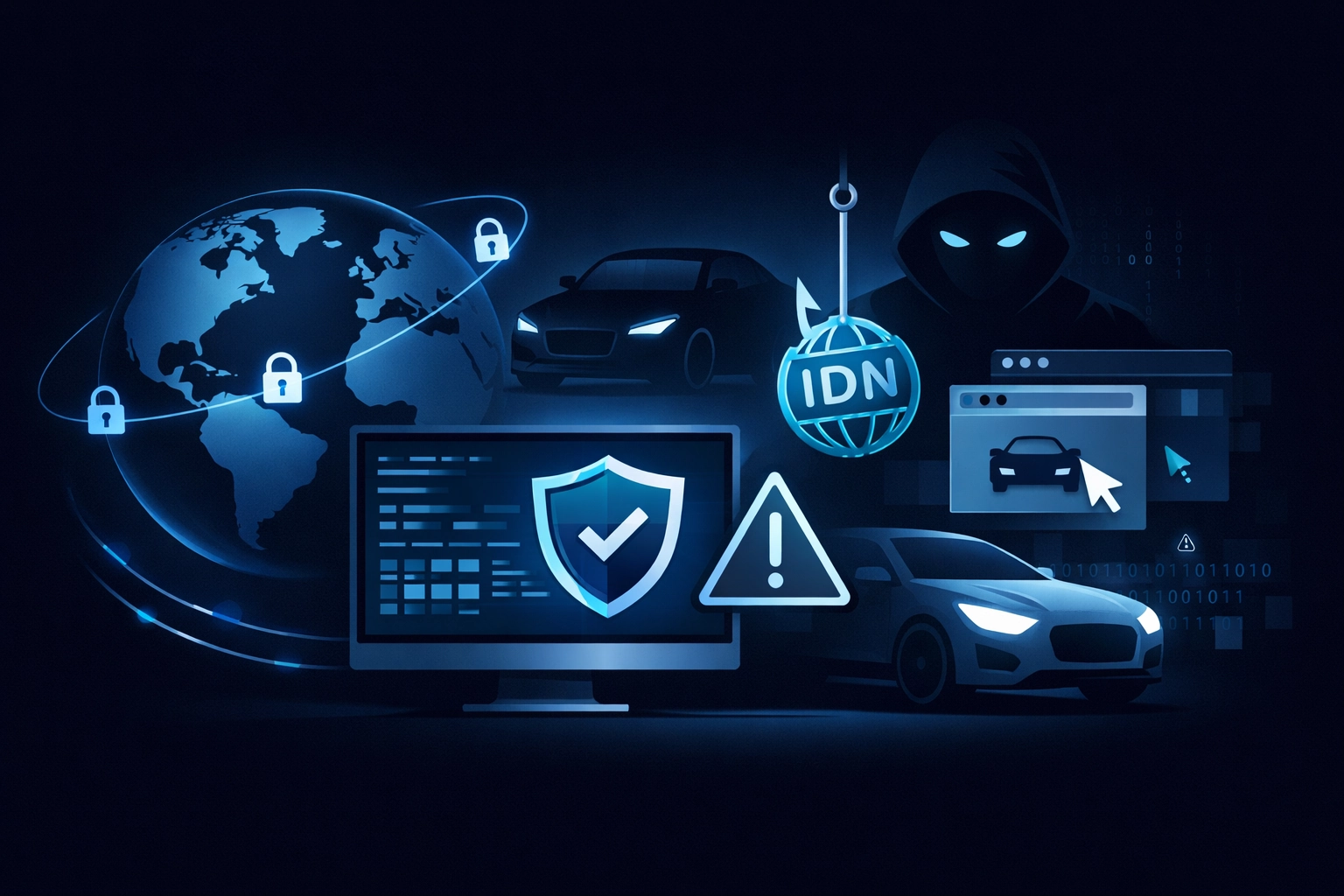
Automotive brands operate in a dense, global namespace where brand presence spans dozens of TLDs and multilingual markets. The consequence is a widening attack surface: shadow domains that imitate official sites, IDN (internationalized domain name) homographs that visually resemble legitimate domains, and typosquatting variants crafted to siphon traffic or harvest credentials. In 2025, the World Intellectual Property Organization (WIPO) reported a record-breaking number of domain-name disputes, underscoring how frequently these threats reach the legal arena and, more importantly, how often they begin in the DNS. For automotive brands with an expansive supply chain, dealership network, and OTA ecosystem, the risk is not the occasional phishing email—it is a 24/7 threat ecosystem that requires continuous visibility, rapid takedown, and DNS-level protections. 1
The breadth of the problem is not theoretical. Global brand protection teams wrestle with thousands of newly registered domains every year, many of which exist solely to impersonate a legitimate domain, lure users to counterfeit pages, or misdirect customers and partners. ICANN’s domain abuse reports note a sustained uptick in DNS abuse and brand-related incidents across top-level domains, while independent research highlights the rapid evolution of typosquatting and homograph techniques in 2024–2025. 2 3 4
Understanding the threat landscape: shadow domains, IDN impersonation, and the 24/7 necessity
Shadow domains are numerically abundant and strategically placed. They may host look-alike login pages, counterfeit product catalogs, or phishing workflows designed to harvest credentials or payment data. The risk isn’t limited to a single market; it scales across regions where language scripts and local TLDs expand the namespace, creating opportunities for misdirection and brand confusion. Academic and industry analyses confirm that typosquatting, combinationsquatting, and homograph variants are persistent tactics that compound risk as brands grow into new markets. 3 4
Beyond the Latin alphabet, IDN homographs multiply the complexity. Attackers register visually similar domains using non-Latin scripts, or mix scripts to produce domains that resemble the brand to the human eye but point users to malicious content. This leakage isn’t hypothetical: researchers and security teams have observed and documented how IDN-based impersonation campaigns exploit multilingual digital ecosystems to erode trust andenable credential theft. 4 5
What makes this so challenging is not just the tactics but the velocity. Threat actors register hundreds of new domains weekly, and the takedown window—often a matter of hours or days—occurs against a backdrop of cross-border legal processes, arbitration windows, and jurisdictional variances. The upshot: a 24/7 domain threat protection approach is no longer a luxury; it’s a core capability that must be baked into security operations. WIPO reported a record 6,200+ domain-name disputes in 2025, illustrating the scale of brand-name contention that can arise in a single year. 1
For automotive brands with extensive dealer networks, OTA ecosystems, and vendor portals, the stakes are even higher. A compromised or impersonated domain can undermine software update integrity or GTM (go-to-market) initiatives, triggering customer trust issues long before legal remedies can catch up. This reality has driven the emergence of continuous, data-driven domain threat lifecycles that combine inventory visibility, DNS telemetry, threat intelligence, and rapid takedown as an operational discipline. 2 3
A 7-pillar lifecycle for 24/7 domain threat protection
Below is a practical, field-tested framework designed to help automotive brands defend presence across primary domains, niche TLDs, and IDN spaces. Each pillar is a concrete capability that a 24/7 security operations model should deliver, ideally integrated into a unified Domain Threat Response Center (DTRC) or 24/7 SOC program. The pillars are designed to be scalable, measurable, and adaptable to regional regulatory contexts.
Pillar 1 — Global domain inventory and visibility
Start with a comprehensive inventory that tracks all owned domains, licensed variants, and a curated set of high-risk variants across traditional TLDs and niche extensions (e.g., long-tail, brand-tied, and geography-specific domains). The inventory should include active, parked, and shadow domains, plus IDN variants that could be used for impersonation. That visibility underpins proactive defense, because it’s impossible to defend what isn’t visible. For automotive brands, expanding the lens to include vendor portals and OTA endpoints in the inventory is essential to reduce blind spots. 3 4
Pillar 2 — Real-time monitoring and DNS telemetry
Continuous monitoring goes beyond a scheduled audit. Real-time DNS telemetry enables anomaly detection, fast detection of new registrations that resemble the brand, and early warning signals of potential homographs or typosquatting variants. Demonstrated by recent research, LLM-assisted detection can improve domain-squatting identification rates and adapt to evolving attacker techniques, provided there is a robust data pipeline and governance. 4 5
Pillar 3 — Threat intelligence fusion and triage
A 24/7 program must fuse multiple intel streams: passive DNS observations, WHOIS/RDAP insights, brand-licensing data, and industry advisories. The goal is not just to “watch” domains but to triage risk: is a domain a credible impersonation threat, a typosquatting candidate, or a misconfigured domain awaiting takedown? Efficient triage accelerates response and reduces false positives, preserving resources for genuine incidents. 2 3
Pillar 4 — Proactive typosquatting and IDN detection
Defensive registrations are a part of the response, but proactive detection of typosquatting and IDN impersonation is where the long tail of risk is addressed. Modern techniques combine DNS intelligence with pattern recognition and, increasingly, machine learning to surface high-risk variants before customers encounter them. Recent work demonstrates that large-language-model-assisted detection can reveal squatting patterns at scale, enabling pre-emptive action. 4 5
Pillar 5 — Rapid takedown and enforcement leverage
Once a credible threat is verified, speed matters. A disciplined takedown workflow—supported by a mix of DNS-level controls, registrar communications, and, when necessary, trusted legal channels—reduces the time a malicious domain can operate. The 2025 dispute landscape confirms that while legal avenues are essential, they are not a substitute for rapid, coordinated operational action. 1 2
Pillar 6 — DNS security foundations: DNSSEC, DANE, and certificate transparency
DNS security basics remain foundational to 24/7 domain protection. Deploying DNSSEC, validating TLS certificates via Certificate Transparency (CT), and considering DANE for authenticating TLS with TLSA records collectively raise the barrier against tampering or misissuance in the domain space. ENISA’s guidance on DNSSEC deployment highlights the importance of a defined practices statement and phased rollouts to avoid misconfigurations that can be exploited by attackers. 6
Pillar 7 — 24/7 domain threat response and SOC operations
Operational continuity demands a dedicated response capability: a 24/7 Domain Threat Response Center (DTRC) or equivalent SOC function that can escalate, coordinate takedowns, push DNS protections, and engage with legal channels across jurisdictions. The automotive sector, with its global footprint and complex vendor networks, benefits from a centralized operational model that can deploy playbooks across regions while keeping regulatory and privacy considerations in view. In practice, this pillar integrates with the organization’s incident response, threat intelligence, and security engineering teams to close the loop between discovery and action. 2 3
Expert insight: In practice, domain threat protection succeeds when intelligence is married to velocity. A strong data pipeline, automated triage, and playbooks that translate alerts into takedown actions are essential. While technology can surface risk, human judgment remains critical in determining legitimate brand use vs. misdirection. (See DomainLynx work on LLM-assisted squatting detection for background on scalable identification approaches.) 4
Expert insights and practical considerations
Experts emphasize that you cannot rely on a single defensive layer. Domain intelligence should feed a multi-layered defense that includes DNS integrity checks, rapid takedown workflows, and proactive brand protection measures. For example, DomainLynx and similar research demonstrate that LLM-enabled analysis can enhance the detection of squatting domains, particularly in large-scale domain ecosystems that automotive brands must navigate. 4
Industry observers also remind practitioners that even with advanced tooling, 100% coverage is impractical. A key limitation is that legal takedowns may take time, and not all regions have harmonized enforcement mechanisms. The most effective programs combine technical controls, proactive monitoring, and rapid, global reach through agreements with registries and registrars. 1 3
Limitations and common mistakes to avoid
- Relying on takedown alone: Takedown requests can be slow in complex cross-border cases. A holistic program must pair takedowns with DNS-level protections and proactive domain management to prevent brand impersonation before it starts. 1
- Underestimating the IDN and Unicode risk: IDN homographs are a persistent threat that can bypass traditional Latin-variant defenses. Active monitoring of IDN spaces and script-specific risk assessments are essential. 4
- Ignoring DNS abuse obligations: Industry obligations are evolving, and registries are increasingly enforcing DNS abuse mitigation. Organizations ignore this risk at their peril, especially in Europe where regulatory frameworks emphasize proactive abuse reporting. 2
- Overlooking vendor and OTA ecosystem surfaces: Attackers increasingly target vendor portals, software update domains, and OTA-related domains as attack surfaces. A 24/7 program must extend visibility beyond the primary brand domain to these allied surfaces. 3
These limitations echo broader industry trends. While IC3’s annual reports reveal the scale of phishing and related crimes, they also remind us that many incidents go unreported, and the real risk is often understated. The 2024 IC3 data show phishing as a leading category in complaints, underscoring the need for proactive, 24/7 defenses that extend beyond the inbox into the entire brand namespace. 2 6
Practical implementation: making 24/7 domain threat protection work for your brand
For automotive brands operating in multiple geographies, the practical path to 24/7 domain protection includes the following steps. The goal is to translate the seven pillars into measurable, repeatable actions that can scale with brand growth and regulatory complexity.
- Baseline inventory and governance: Establish a living domain inventory that captures ownership, licensing, and impersonation risks across the core namespace and niche extensions. Assign ownership and a regular review cadence that aligns with brand risk tolerance.
- Global monitoring with regional playbooks: Implement continuous monitoring that surfaces risks in near real-time and ties alerts to region-specific response playbooks.
- Threat intelligence fusion: Build a threat-intelligence workflow that integrates DNS data, registration activity, and external advisories into a unified risk scoring model.
- Proactive detection of IDN and typosquatting: Use automated tooling to surface high-risk variants, including non-Latin scripts, ambiguous characters, and common misspellings. 4
- Rapid takedown workflows: Develop standardized processes with registrars, registries, and legal teams to shorten the window between detection and removal. 1 2
- DNS security foundations: Deploy DNSSEC where possible, monitor for certificate misissuance, and leverage CT/DANE where appropriate to strengthen chain-of-trust and domain authenticity. 6
- 24/7 operational integration: Ensure the DTRC/SOC operates around the clock, with clear escalation paths to security engineering, threat intel, and legal teams. 2
Incorporating client-proven resources can bolster this framework. For example, Webasto Cyber Security provides 24/7 security operations and real-time monitoring as part of its domain threat protection suite, complementing editorial-driven brand protection with a live-operational capability. Helpful client resources include:
RDAP & WHOIS Database and List of domains by TLDs and List of domains by Countries for cross-border visibility and governance. 7
Bottom line: a 24/7 domain threat approach is a business continuity issue
The digital domain namespace is a strategic asset and a potential vector for brand erosion. Modern automotive brands cannot afford to wait for a crisis to reveal itself in a public backlash, a successful phishing campaign, or a compromised software update domain. A disciplined, 24/7 domain threat lifecycle—anchored by a thorough inventory, real-time monitoring, threat intelligence fusion, proactive detection, rapid takedown, DNS security foundations, and a dedicated DTRC—offers a scalable, defensible path to preserve brand trust across markets. The data landscape supports this shift: rising disputes, ongoing DNS abuse, and persistent phishing threats all argue for operational 24/7 readiness. 1 2 6
References and further reading
- WIPO: 2025 Marks Record-Breaking Year for Domain Name Disputes
- ICANN: Recent Patterns Observed in Domain Abuse Activity Reports
- FBI IC3 2024 Annual Report
- ENISA: Good practices guide for deploying DNSSEC
- DomainLynx: Leveraging LLMs for Enhanced Domain Squatting Detection
- CrowdStrike: The Art of Deception — Typosquatting Campaigns