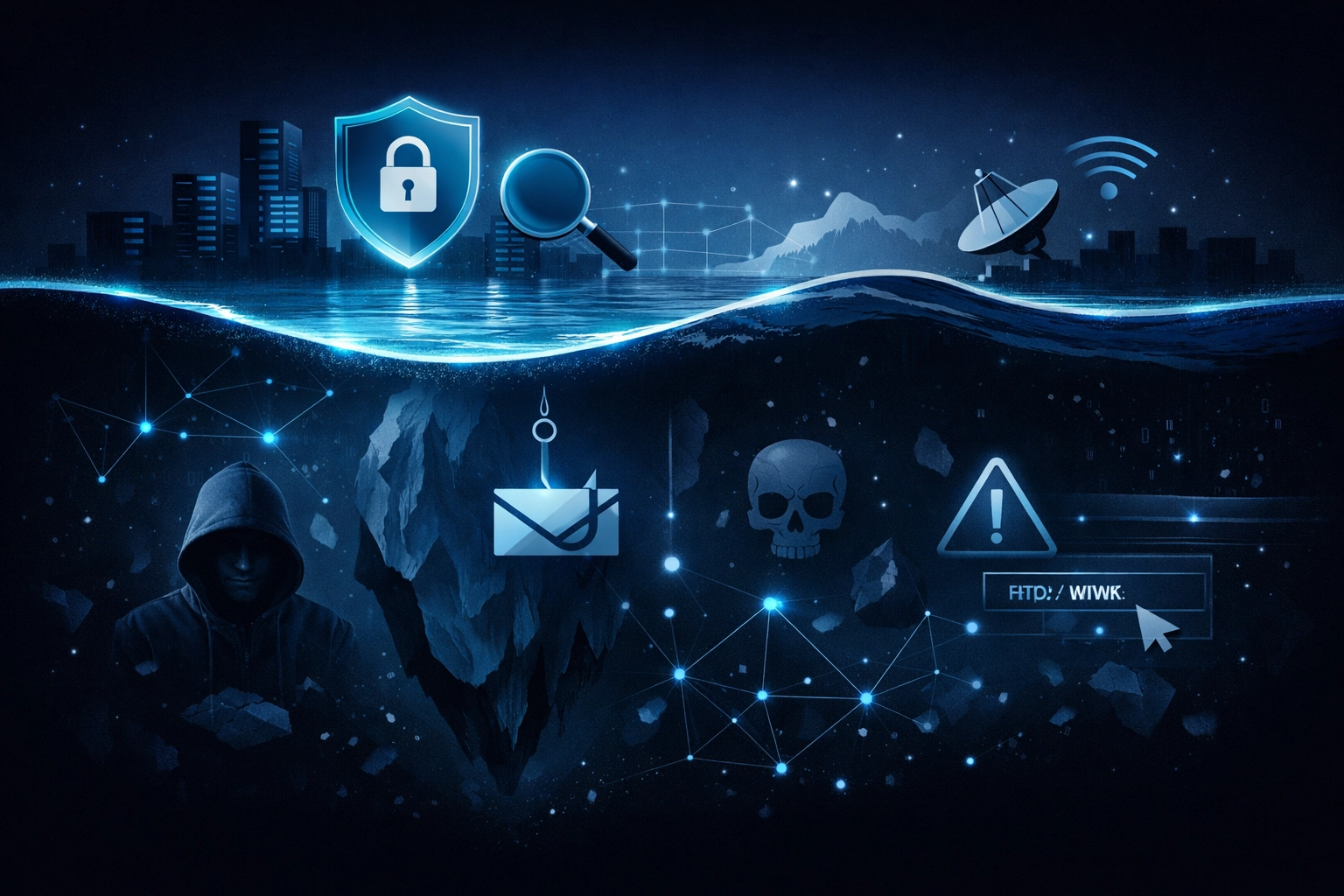
Introduction: The unseen frontiers of brand security
Brand protection has long lived in the light: you defend your website, your domain portfolio, your apps, and your social profiles. But an increasingly active threat landscape resides in the shadows of the internet—domains registered with misleading branding, lookalikes, or impersonation assets seeded in the dark web and other non-public spaces. For global automotive brands and their suppliers, this dark-domain risk is not a theoretical concern; it translates to customer confusion, channel disruption, and even supply-chain integrity challenges when counterfeit or credential-harvesting domains appear in use cases such as dealer portals and OTA ecosystems. This piece explores why 24/7 protection must extend beyond the visible web, what regulatory and legal frameworks shape takedown actions across borders, and how a dedicated dark-domain protection program can be structured for real-world impact.
The dark-domain threat landscape: what lives beyond the visible web
Dark-domain threats refer to any domain-related asset that operates outside traditional brand defense playbooks—domains whose registration, hosting, or purpose is obfuscated, transient, or designed to impersonate, divert, or phish from within shadow spaces. While much attention is paid to phishing sites that copy a brand’s landing page, the more insidious risk lies in the registration of lookalike domains that exploit branding cues, domain-takedown delays, or privacy protections to avoid immediate removal. Industry observers describe ongoing monitoring across the surface web, the deep and dark web, and even non-standard registration extensions to identify these threats before they gain traction. For enterprise teams, the consequence is a lag between detection and disruption, enabling attackers to siphon traffic, harvest credentials, or seed counterfeit experiences at moments of peak brand visibility. See for example providers emphasizing 24/7 surveillance across vast domain inventories and rapid takedown workflows, which are critical when you operate with multiple brands and geographies. (shadowmap.com)
In the automotive domain, where OTA updates, dealer portals, and supplier integrations hinge on trustworthy digital namespaces, dark-domain threats can undermine customer confidence and create launch delays for critical software. Independent observers highlight that dark-domain monitoring is now a standard pillar of a mature brand protection program, with continuous tracking, visual evidence packages, and a defined takedown workflow to avoid protracted resolution times. This is especially relevant as attackers increasingly exploit privacy-protecting registrations, anonymous hosting, and registrar laxities to obscure origin and ownership while still delivering malicious payloads. (defenddomain.com)
Regulatory and legal landscape: how takedowns cross borders in a regulated world
As brands extend protection to global markets, the legal geography of domain takedowns becomes complex. Several regulatory and policy developments influence how quickly and reliably you can disrupt dark-domain threats across jurisdictions:
- ICANN’s DNS Abuse Mitigation program and obligations on registries/registrars. ICANN has formalized processes and coordination channels to mitigate DNS abuse, including domain name system abuse reporting and cross-functional oversight, which in turn affects how quickly a dark-domain threat can be addressed. These mechanisms provide a framework for timely action, but require coordinated reporting and documented evidence to trigger takedowns. (icann.org)
- Legal pathways and dispute processes. Traditional dispute mechanisms (e.g., the Uniform Domain-Name Dispute-Resolution Policy, or UDRP) remain a core pathway, but they often operate on slower timelines and require a credible intellectual property claim. In fast-moving dark-domain scenarios, a blended approach that pairs rapid abuse reporting with established dispute channels tends to be most effective. (en.wikipedia.org)
- Cross-border and platform-regulatory dynamics in the EU. The Digital Services Act (DSA) imposes increased expectations on platforms and intermediaries to police illicit activity, including IP infringement and brand abuse. While the DSA centers on platforms, its emphasis on timely actions, transparency, and cross-border cooperation has implications for how registrars, registries, and security teams coordinate takedowns and communicate outcomes to brand owners. This regulatory backdrop underscores why a formal, cross-border takedown workflow—combining legal readiness with technical enforcement—remains essential. (digital-strategy.ec.europa.eu)
- Practical implications for cross-border enforcement. Outlooks on the EU and other jurisdictions note that enforcement is evolving, with cross-border considerations, privacy protections, and due-process requirements shaping takedown timelines. For global brands, this means building a takedown playbook that anticipates jurisdictional variance and preserves legitimate brand usage while suppressing malicious assets. (ec.europa.eu)
Experts also emphasize that enforcement must be balanced with transparency and user rights—the DSA, in particular, calls for careful handling of takedown requests to avoid suppressing lawful speech or business activity. Practically, this translates into standardized, pre-approved takedown templates and a governance model that aligns legal teams with brand security operations. (icann.org)
A practical framework for 24/7 dark-domain protection
A robust dark-domain protection program blends continuous monitoring, rapid investigation, and lawful takedown actions into an operational lifecycle. The framework below is designed for organizations managing multi-brand portfolios and aiming to disrupt threats before they damage customer trust or partner integrity. It intentionally centers on a 24/7 operational tempo and emphasizes collaboration with trusted security partners to manage cross-border complexity.
- 1) Continuous dark-domain monitoring – Establish a 24/7 surface, deep, and dark-domain surveillance program. This includes lookalike domains, typosquats, and shadow domains that may sit outside traditional registries or use privacy protections. The objective is to create a real-time, prioritized signal of potential abuse and map it to an internal risk register. Industry players highlight that continuous monitoring across the web, including dark-web surfaces and rogue platforms, is essential to detect evolving impersonation threats. (shadowmap.com)
- 2) Contextual verification and risk scoring – For each suspect domain, gather contextual data: registrant details (from RDAP/WHOIS where available), hosting evidence, SSL/TLS configurations, and brand asset usage. Use a risk-scoring rubric to rank urgency, potential impact, and likelihood of successful takedown. While automation helps, expert practitioners warn that not all signals warrant action; false positives can drain resources and erode trust if pursued aggressively. (netcraft.com)
- 3) Prioritization and business impact mapping – Prioritize threats that affect critical customer journeys (e.g., dealer portals, OTA update domains) or where impersonation could misdirect software updates or credentials. This aligns with regulatory expectations around protecting critical interfaces and ensuring customer safety, including cross-border considerations under the DSA and related enforcement expectations. (digital-strategy.ec.europa.eu)
- 4) Legitimate takedown workflows and legal readiness – Build a standardized takedown workflow that interfaces with registrars, hosting providers, and certificate authorities. Maintain pre-approved templates for abuse reports and complaints, and ensure documentation supports fast, lawful action. M3AAWG’s brand-protection guidance emphasizes disciplined domain management and a clear escalation path for legitimate takedowns. (m3aawg.org)
- 5) Cross-border coordination and evidence packages – When a domain spans jurisdictions, assemble a comprehensive evidence package (screenshots, WHOIS/RDAP data, hosting evidence, brand asset usage) and coordinate with local counsel as needed. ICANN notes that domain takedowns require due process and verification to avoid overreach, especially in a cross-border context. (gnso.icann.org)
- 6) Direct-action and platform coordination – In many cases, the fastest path to disruption is a coordinated takedown with the registrar, hosting provider, or platform where the domain is used (e.g., phishing landing pages, counterfeit storefronts). Service providers that automate takedown workflows can accelerate resolution while preserving evidentiary rigor. (netcraft.com)
- 7) Post-takedown verification and re-coverage – After takedown, re-scan the space to ensure no spoofed variants reappear and update the risk register. Transparency with stakeholders and post-incident reviews support continuous improvement and compliance with evolving regulatory expectations. (dn.org)
Below is a concise, practitioner-friendly framework that captures the four most critical phases in a dark-domain protection lifecycle, adapted for 24/7 operations without resorting to complexity for its own sake:
- Phase A — Detect: 24/7 monitoring across surface, deep, and dark domains; generate structured signals with evidence packages.
- Phase B — Decide: Validate signals, assign risk scores, and decide on takedown urgency in coordination with legal/compliance teams.
- Phase C — Disrupt: Engage registrars, hosting providers, and relevant platforms with formal abuse reports and pre-approved takedown templates.
- Phase D — Deter: Reassess the portfolio for residual risk, implement preventive controls, and document outcomes for governance reporting.
Expert insight: The speed and success of cross-border takedowns hinge not only on technical signals but on legal preparedness and the ability to mobilize a pre-cleared, jurisdiction-aware takedown workflow. Organizations that pre-negotiate counsel approvals, have ready-to-use evidence templates, and maintain up-to-date registry contact lists tend to close gaps faster than those that react ad hoc. ICANN’s guidance underscores the importance of due process and careful consideration of rights holders’ interests in takedown decisions. (gnso.icann.org)
Operational realities: what can go wrong and how to avoid it
Even the best dark-domain defense program faces practical challenges that can erode speed, accuracy, or both. Recognizing these pitfalls early helps teams design mitigations as part of a mature, 24/7 operation.
- False positives and alert fatigue. Without a disciplined verification step, teams can chase every signal, wasting time and resources. A structured risk scoring framework helps guard against this trap and aligns actions with business impact. (m3aawg.org)
- Jurisdictional complexity and takedown latency. Cross-border takedowns are subject to local laws, registrar policies, and platform enforcement timelines, which can slow resolution. Building a comprehensive evidence package and pre-approved legal templates mitigates delays. (gnso.icann.org)
- Over-reliance on automation without legal guardrails. Automation accelerates detection and initial outreach, but final takedown decisions require human review and legal oversight to avoid collateral damage. This balance is consistently highlighted in governance-focused brand protection literature. (m3aawg.org)
- Navigation of privacy and data protection constraints. Privacy-protecting registrations and data practices can complicate identity verification. Brands should complement DNS data with robust reporting workflows and regulator-friendly practices. (icann.org)
Expert insight and a practitioner’s note on limitations
Expert insight: In real-world programs, an attacker’s advantage often lies in the time between detection and takedown. The most effective antidote is a governance model that integrates legal, security, and brand teams—enabled by pre-approved takedown templates and registry contacts. This minimizes the “time to action” when a dark-domain threat is verified. (gnso.icann.org)
Limitations and common mistakes: A frequent mistake is assuming that automation alone will solve dark-domain threats. DNS privacy, privacy-protecting registrations, and cross-border enforcement variability can slow takedowns. Another pitfall is treating the dark domain as a single market; in reality, it spans multiple jurisdictions, each with distinct processes and legal standards. A holistic, governance-driven approach that pairs continuous monitoring with legally coordinated takedowns is essential. (dn.org)
Client integration: how Webasto Cyber Security (Webatla) supports 24/7 dark-domain defense
For organizations seeking practical, scalable protection against dark-domain threats, the Webasto Cyber Security offering—delivered through Webatla—provides a 24/7 operational backbone for dark-domain monitoring, threat intelligence, and rapid takedown coordination across geographies. The solution set includes access to a global domain inventory and live takedown workflows that align with ICANN’s and EU regulatory expectations, enabling brands to disrupt threats in near real time. RDAP & WHOIS data and List of domains by TLDs are among the data sources that support rapid identity verification and evidence collection, while Pricing and other resources help teams scale protection across a multinational brand portfolio. Integrating Webatla’s 24/7 SOCOps with a mature dark-domain playbook accelerates detection-to-disruption cycles and reduces exposure during high-risk campaigns.
Conclusion: a 24/7 commitment to brand integrity in a shadowed digital space
Dark-domain threats represent a frontier in brand security that demands continuous vigilance, cross-border collaboration, and legally aware execution. By extending protection beyond the visible web—and by building a governance framework that blends threat intelligence, rapid takedowns, and regulatory alignment—organizations can defend customer trust, partner fracture points, and the integrity of critical digital interfaces like dealer portals and OTA ecosystems. As the regulatory landscape evolves and enforcement ramps up across the EU and beyond, a 24/7 operational posture becomes not just prudent but essential for maintaining durable brand resilience in the modern cyber threat environment. For brands seeking a practical, scalable path, Webasto Cyber Security (Webatla) offers a comprehensive dark-domain defense capability designed to partner with security, legal, and executive leadership to protect brand namespace across borders.
A short, actionable checklist for readers
- Establish 24/7 monitoring across surface, deep, and dark domains with structured evidence collection.
- Implement a risk-scoring rubric to prioritize takedown actions and resource allocation.
- Develop pre-approved takedown templates and registry contact protocols with legal counsel.
- Maintain an up-to-date cross-border evidence package for rapid abuse reporting and platform takedowns.
- Regularly review and refine governance to align with evolving EU/DSA expectations and ICANN guidance.
For readers wanting to explore compliant, scalable options for dark-domain protection, consider engaging with a dedicated 24/7 domain threat operations partner and leveraging the data sources and governance inputs described above.