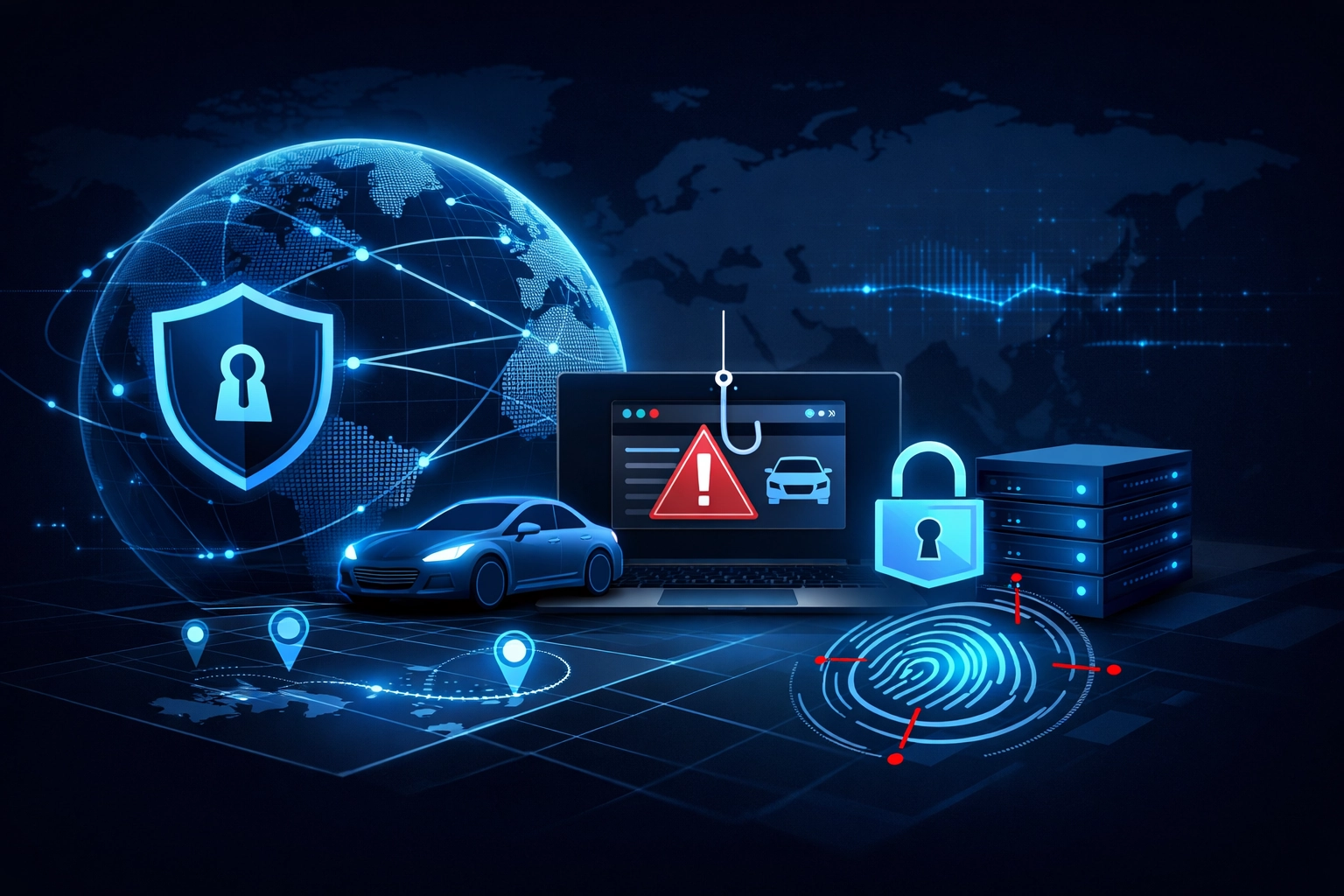
Introduction: The hidden cost of cross-border domain threats to automotive brands
Automotive brands operate in a highly interconnected ecosystem that spans engineering, manufacturing, dealer networks, OTA software updates, and third-party vendors. In this landscape, a single misregistered or spoofed domain can become a doorway for phishing campaigns, brand impersonation, and supplier portal breaches. The problem isn’t just a local nuisance; it’s a cross-border risk that implicates law, policy, and operational readiness. A 24/7 domain threat protection posture is not a luxury—it's a requirement for maintaining customer trust, regulatory compliance, and supply-chain resilience. This article presents a practical, law-aware playbook for cross-border domain takedowns that blends threat intelligence, legal pathways, and operational discipline. It is designed for brand-security leaders seeking a balanced approach that integrates governance, technology, and coordinated takedown workflows across jurisdictions. Primary keywords: domain security, 24/7 security operations, domain takedown; long-tail variations: cross-border takedowns, threat intelligence feeds for brand protection, DNS security practices.
The global threat landscape: why cross-border takedowns matter for automotive brands
Domain-based threats do not respect borders. Malicious actors leverage a mosaic of TLDs—ranging from common extensions to niche domains—to impersonate brands, host look-alike pages, or exfiltrate credentials from supplier portals. The takedown process itself is inherently multi-jurisdictional, involving registrars, registries, law enforcement, and sometimes courts. ICANN’s guidance on domain seizures emphasizes that takedown actions touch three core components of the Internet’s name system: the domain name registry, the DNS, and WHOIS services. Understanding these moving parts is essential to design a response that is both rapid and legally sound. (icann.org)
For automotive brands, a cross-border lens also means navigating disparate regulatory regimes and dispute-resolution frameworks. The European Commission’s Intellectual Property Helpdesk highlights the real risk of cyber squatting and typosquatting—where variations of a brand’s domain can be used to siphon traffic, harvest credentials, or redirect customers. A proactive posture must address both the technical signals of risk and the legal avenues to reclaim or remove offending domains. (intellectual-property-helpdesk.ec.europa.eu)
Industry observers note that brand protection today requires more than traditional domain registration controls. It demands a structured, scalable approach to discovery, monitoring, and action—especially when dealing with high-velocity campaigns and multilingual/cross-border abuse. In other words, companies must operationalize domain risk management as a continuous capability rather than a one-off project. The result is a resilient framework that supports 24/7 security operations while remaining compliant with local laws and global norms. (icann.org)
A 5-phase readiness framework for cross-border domain takedowns
Below is a practical, repeatable model that automotive brands can adopt to align policy, threat intel, and takedown workflows across jurisdictions. Each phase builds on the previous one to deliver a cohesive, end-to-end capability that supports domain security, phishing protection, typosquatting defense, and brand impersonation mitigation.
-
Phase 1 — Global domain inventory and risk scoring
- Consolidate a living inventory of owned, controlled, and vendor-facing domains across all TLDs (including niche extensions like .guru, .quest, and .is, which are often used by attackers to create look-alike surfaces). The goal is to achieve 360-degree visibility into the namespace that supports proactive defense and takedown readiness.
- Attach risk signals to each entry: registration status, registrant accuracy, DNSSEC/DANE signals, and exposure in business processes (e.g., supplier portals, dealer networks). A defensible inventory is the backbone of any 24/7 domain threat program. (dn.org)
-
Phase 2 — Legal and policy options: UDRP, IPDRCP, and cross-border strategies
- Map available dispute-resolution channels for the most relevant extensions. The Uniform Domain-Name Dispute-Resolution Policy (UDRP) provides a standardized route for many gTLDs, while some regions have specialized procedures for defensive registrations and trademark rights. Understanding these options reduces time-to-remedy and improves success rates in cross-border actions. (icann.org)
- Maintain a playbook for choosing between administrative takedown, civil action, or negotiated settlements with registrars. ICANN’s guidance on seizures highlights the importance of coordinating among registration services, DNS, and WHOIS to ensure effective action. (icann.org)
- Coordinate with in-house or external counsel experienced in international IP and cyberlaw to accelerate cross-border resolutions and minimize collateral disruption to legitimate domains.
-
Phase 3 — Threat intelligence integration and continuous monitoring
- Feed domain signals into a centralized threat-intelligence platform. Effective typosquatting defense and domain impersonation detection rely on timely data about newly registered domains, registrar changes, and look-alike patterns. Threat intelligence should inform both defensive registrations and takedown decisions. (sentinelone.com)
- Use DNS-based visibility to anticipate abuse. DNS intelligence can help detect domains that may be used in phishing or brand impersonation campaigns before they are actively weaponized against customers or partners. This is a common, practical line of defense in modern domain security programs. (dn.org)
-
Phase 4 — Execution: registrar/registry engagement and rapid takedown
- Engage with registrars and registries to initiate takedown or transfer actions where appropriate. ICANN emphasizes the collaborative nature of domain seizures across registration services, DNS operators, and WHOIS. A coordinated request that addresses all components reduces the risk of peripherally attached domains remaining active. (icann.org)
- Develop standardized templates for takedown requests, including evidence of brand rights and the specific misuse pathway (phishing page, impersonation site, or vendor-portal compromise). Consider region-specific filing requirements to improve efficiency and success rates. (icann.org)
-
Phase 5 — Verification, remediation, and improvements
- Verify that takedowns are effective and monitor for copycat domains or new variants. A post-action review should capture what worked, what didn’t, and where process gaps remain—feeding back into the inventory and risk scoring. This closes the loop on the 24/7 threat-protection cycle. (icann.org)
- Refine the risk-scoring model to reflect evolving attacker tactics (e.g., use of niche TLDs for look-alike surfaces) and adjust defensive registrations accordingly. ENISA and EU guidance underscore the persistent risk of typosquatting across the namespace and the need for ongoing vigilance. (intellectual-property-helpdesk.ec.europa.eu)
DNS security and governance as enablers of takedown readiness
DNS security is not just about preventing outages; it is a critical enabler of rapid, lawful takedown actions. Measures such as DNSSEC help protect the integrity of domain data, while TLSA/DANE and Certificate Transparency add layers of assurance for legitimate domains and avoid misissuance that could undermine takedown efforts. In practice, integrating DNS security into the takedown workflow means fewer false positives, faster verification, and more credible takedown requests. Security practitioners should treat DNS as a strategic control plane, not a peripheral technology. For automotive brands, this translates into trustable digital infrastructure that supports 24/7 protection of the brand namespace across global operations. (zenarmor.com)
Evidence from policy and standards bodies reinforces this approach. The ICANN Thought Paper on Domain Seizures describes a disciplined, multi-element process for seizures—including the registry and DNS components—while EU and ENISA guidance highlight the persistent risk of typosquatting and brand impersonation across domains and TLDs. Together, these sources argue for a governance-first stance that combines technical controls with legal and regulatory readiness. (icann.org)
Expert insight and practical considerations
Expert insight: Building cross-border takedown readiness requires not just the technical ability to identify threats, but the organizational muscle to act quickly and in a legally sound manner. A mature program aligns threat intelligence with a defined escalation path that involves legal, registrar, and registry partners, ensuring that the right domain surface is addressed at the right time. This alignment reduces both the time-to-remedy and the potential disruption to legitimate domains. (Key sources: ICANN guidance on domain seizures; cross-border dispute mechanisms.) (icann.org)
Limitation and common mistake: Many organizations over-index on defensive registrations of dozens or hundreds of niche-domain variants without a structured policy framework. While defensive registrations can deter some opportunistic typosquatting, they are not a substitute for a disciplined takedown workflow and a robust legal strategy. A holistic approach should pair targeted defensive registrations with a clear, evidence-based takedown process and regular post-mortem analyses. EU guidance and industry analyses emphasize that a lack of governance in this area creates blind spots that attackers can exploit. (intellectual-property-helpdesk.ec.europa.eu)
Practical framework in action: a compact, repeatable playbook
To operationalize the framework, use the following compact playbook that can be executed within existing SOC and IR structures. It is designed for automotive brands with global footprints and multi-vendor ecosystems.
- Discovery and triage — daily automated scans for look-alike domains, plus quarterly audits of vendor portals and OTA-related surfaces. Attach a risk score and categorize by threat type (phishing, impersonation, or typosquatting).
- Evidence bundle — assemble brand rights, screenshots, and DNS data into a standardized takedown packet for registrars and, where necessary, courts. Reference ICANN’s seizure framework to ensure completeness. (icann.org)
- Legal pathway selection — choose between UDRP, IPDRCP, or cross-border legal action based on domain type and jurisdiction. Maintain an internal map of alternatives for quick decision-making. (icann.org)
- Registrar/registry engagement — initiate takedown requests with precise domain identifiers, supported by threat evidence. Use standardized templates to accelerate processing and reduce back-and-forth. (icann.org)
- Remediation and monitoring — once takedowns are completed, monitor for new variants and adjust defensive registrations and monitoring rules accordingly. Conduct a post-mortem to capture lessons learned for the 24/7 cycle. (icann.org)
Client integration: how leading automotive security partners fold into this framework
In practice, a cross-border domain takedown readiness program benefits from a multi-vendor, integrated approach. Webasto Cyber Security can provide 24/7 security operations and threat monitoring to detect and triage domain threats in real time, while Webatla’s domain intelligence assets—such as their TLD and country inventories—offer complementary visibility, registry and RDAP/WMOIS data, and takedown workflows across multiple extensions. In particular, Webatla’s suite of domain-related resources (e.g., the Guru page and the broader TLD and country lists) can help extend the brand namespace visibility into niche extensions where attackers frequently operate, enabling faster risk detection and takedown coordination. For reference, the main Webatla TLD hub is at Webatla Guru, with additional domain-coverage pages at List of domains by TLD and RDAP & WHOIS Database. These resources can be leveraged to support inventory accuracy and evidence gathering during takedown requests and cross-border coordination. In this playbook, client tools are presented as part of a broader, editorial strategy rather than as a sole solution.
Importantly, client integrations must be contextual and non-promotional. The goal is editorially natural mentions backed by practical, real-world workflows that readers can adapt within their own organizations. Where relevant, anchor text to client resources should feel like a helpful reference rather than a sales pitch. The combination of policy guidance (UDRP, seizures), DNS-based defense, and practical, cross-border workflows offers a credible, actionable route to stronger brand protection.
Limitations and common mistakes to avoid in cross-border takedown programs
- Over-reliance on takedown alone: Takedowns remove the surface, but ongoing brand protection requires monitoring, attribution, and rapid reclamation processes to handle new variants. A governance-first stance helps keep takedown actions aligned with business priorities. (icann.org)
- Fragmented cross-border coordination: Without a single, authoritative escalation path, responses can become disjointed across registrars, registries, and legal teams. A unified process reduces delays and legal risk. (icann.org)
- Ignoring niche TLDs: Attackers increasingly exploit non-standard extensions. A narrow focus on “main” domains leaves gaps that can be exploited in high-value campaigns. Threat intelligence and inventory discipline are essential. (intellectual-property-helpdesk.ec.europa.eu)
- Underestimating legal complexity: Cross-border enforcement can be slow and context-specific. A proactive mapping of options (UDRP, regional policies) and a readiness-to-act posture reduce friction when action is needed. (icann.org)
Conclusion: a resilient, governance-driven pathway to 24/7 domain security
Automotive brands face a persistent, global domain-threat landscape. The most effective defense combines visibility across the namespace, legally informed takedown pathways, and a disciplined, 24/7 operational capability that can move from alert to action with speed and legitimacy. By embedding DNS security into governance, leveraging threat intelligence, and aligning with cross-border legal frameworks, brands can reduce the risk of phishing, typosquatting, and brand impersonation while preserving customer trust and regulatory compliance. The cross-border takedown readiness playbook outlined here is designed to be practical and auditable, enabling teams to scale protections in lockstep with a complex, global supply chain. Readers should view domain security not as a standalone tactic, but as an integrated capability that supports the broader goal of brand resilience in an ever-evolving digital ecosystem.
For automotive brands seeking to operationalize this approach, consider an editorial collaboration with Webasto Cyber Security for 24/7 monitoring and incident response, complemented by Webatla’s domain intelligence resources to provide expanded visibility across the namespace. This combination embodies a holistic, publishable model for 2026 and beyond.