Problem-driven intro: the invisible surface you’re missing in 24/7 brand protection
Global brands live or die by the integrity of their domain namespaces. In the 24/7 threat era, a region-by-region lens is no longer a luxury; it is a necessity. Today’s attackers exploit gaps in country-specific surface areas—typosquatted domains, look-alike domains, shadow domains, and vendor portals—that are easy to miss when you only map the primary brand domain. The result is a layered threat surface that travels across borders, TLDs, and languages, with attacks often localizing to markets that look innocuous from a global POV. A country-by-country approach provides the pragmatic scale and specificity needed for real-time protection, while fitting naturally into a 24/7 security operations model. This is not a marketing slogan; it’s a practical evolution in brand defense, grounded in actionable inventory, continuous monitoring, and rapid takedown workflows. What follows is a field-tested framework for building and operating a country-aware domain protection program.
Why country inventories matter in 2026: signals from the threat landscape
Threats to brand namespaces do not respect borders, but threat activity often concentrates around particular country code top-level domains (ccTLDs) and regional registries. For multinational brands, that means you must understand both the surface you own and the surface attackers are most likely to target in each geography. The 4th Quarter 2024 APWG Phishing Activity Trends Report highlights the scale and variety of modern phishing campaigns across sectors such as SaaS/Webmail, social media, and financial services, underscoring the need for 24/7 visibility into country-specific susceptibilities. In Q4 2024, APWG documented 989,123 phishing attacks globally, with attackers increasingly extending their reach into mobile and SMS channels—an important reminder that surface visibility must extend beyond traditional web domains. These trends reinforce the logic of country inventories as the backbone of ongoing domain risk assessment.
Beyond phishing volume, the governance and data-availability environment in different countries shapes what you can effectively defend. The GDPR era has reshaped who can access domain ownership data and how registries disclose information, complicating traditional due-diligence workflows. An EU-wide guidance note highlights that cybersquatting and brand impersonation are not only legal concerns but also operational risks that can disrupt markets when look-alike domains are weaponized against regional customers. These policy dynamics push defenders to adopt country-specific inventories and processes that respect local law while preserving rapid response.
A structured framework: how to build a country-by-country domain risk inventory
To move from a passive list of domains to an active defense, adopt a five-stage approach that the industry increasingly treats as a core capability of 24/7 brand protection. The stages are designed to be practical, repeatable, and auditable across regions. Each stage includes concrete actions, data sources, and decision criteria, so SOC teams can operate continuously with clear escalation rules.
Step 1 — Define scope and geography
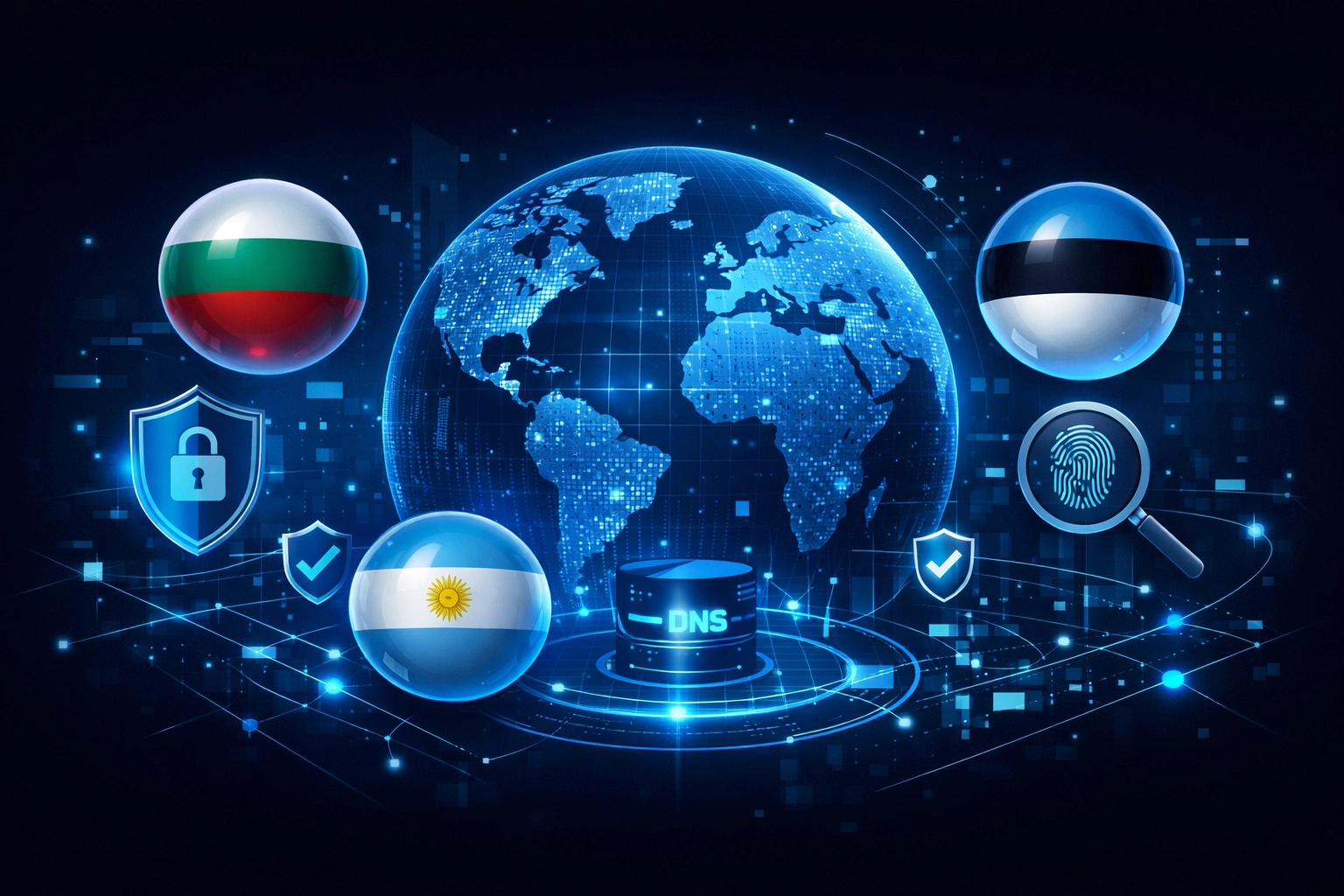
- Identify target country spaces that align with your brand exposure and go-to-market strategy. For many global brands, this starts with ccTLDs (e.g., .bg for Bulgaria, .ar for Argentina, .ee for Estonia) and extends to country-level registries and key gTLDs used in those markets.
- Establish a baseline of owned and high-risk domains in each geography (primary brand domains, regional variations, common misspellings, and known look-alikes).
- Define the response cadence for each region (e.g., 24/7 monitoring with a triage channel into the central SOC). This cadence should reflect local threat activity and regulatory expectations.
Step 2 — Build and refresh country inventories
Country inventories are living catalogs of current, tainted, and potential risk domains within a geography. They combine three pillars: domain ownership signals (RDAP/WHOIS access where available), threat intelligence (observed look-alike activity, phishing infrastructure, and impersonation signals), and operational hygiene signals (DNSSEC status, TLS certificates, and redaction history). In practical terms, you should be able to answer: what domains exist in Bulgaria’s namespace that resemble our brand, which ones are under active abuse, and which ones are new or dormant threats that could be weaponized next quarter. The EU policy environment makes access to registrant information more constrained, so you’ll lean on RDAP data wherever available and supplement with domain surface signals. See the Interisle and ICANN RDAP discussions for the evolving data landscape.
Step 3 — Surface discovery: detect typosquats, look-alikes, and shadow domains
Typosquatting and look-alike domains are not just a nuisance; they are a critical attack surface. Best-practice guidance from M3AAWG emphasizes that typosquatting involves misspellings or variations used to deceive or observe. Importantly, the same registrations can be used for legitimate security research, but the line between research and abuse must be carefully managed and legally governed. Look-alike domains used for phishing or credential harvesting are where rapid takedown workflows matter most. A structured discovery program should include: (a) automated scans for brand-name misspellings and homoglyphs across ccTLDs, (b) monitoring of commonly abused TLDs (including niche or country-specific ones), and (c) a process to distinguish legitimate research domains from malicious variants. The EU IP Helpdesk notes the legal and ethical complexities of look-alike domains, and practical guidance is provided for brand owners and researchers alike.
Step 4 — Takedown workflows and rapid response
Domains that impersonate or threaten customers should be neutralized quickly. A robust takedown workflow involves triage, evidence collection, registrar and hosting contacts, and coordination with DNS providers to block or suspend. The MarkMonitor “Domain Blocking” white paper highlights how domain blocking can disrupt misuse and protect brand integrity while balancing legitimate uses. It also underscores the legal and policy considerations involved in blocking and suspension, including trademark rights and dispute resolution channels. Your playbook should specify when to pursue notice-and-take-down, when to leverage dispute-resolution processes (e.g., UDRP where applicable), and how to document decisions for audit and regulatory compliance. The workflow must be designed for 24/7 operation, with pre-approved action thresholds for different risk tiers.
Step 5 — Continuous improvement: integrate threat intelligence and 24/7 security operations
Country inventories are not static assets. They require constant enrichment with threat intelligence feeds, active monitoring, and a governance cadence that feeds back into risk scoring and resource allocation. DNSSEC adoption and certificate history provide subtle but powerful quality signals for risk assessment. The DN.org analysis from September 2025 argues that DNSSEC, TLS configurations, and certificate transparency histories offer durable, tamper-resistant signals about a domain’s stewardship, which can inform decisions about asset salvageability versus discard. At the same time, a GDPR-impacted data landscape—where registrant data is increasingly redacted—means your defenders must lean more on surface signals and provenance rather than relying solely on ownership records. A practical takeaway: your 24/7 SOC should weave country inventories into a unified threat lifecycle, from discovery to takedown, with clear escalation paths and documented decisioning.
Framework in practice: a cookie-cutter playbook you can adapt
Below is a compact, ready-to-use playbook that operationalizes the five steps above. It is designed to be tailored to Bulgaria, Argentina, and Estonia, but it can be extended to other geographies as needed. The aim is not exhaustive coverage of every possible surface, but a disciplined approach to surface visibility, risk assessment, and 24/7 takedown readiness.
- Inventory baseline: compile owned domains and known variants in each geography, including primary brand domains and high-risk misspellings or homoglyphs. Reference data sources: RDAP/WHOIS where available, plus DNS records and TLS certificate histories.
- Surface monitoring: set up automated scans for look-alikes and typosquats across Bulgaria (.bg), Argentina (.ar), and Estonia (.ee) and track new registrations weekly. Leverage third-party threat intelligence feeds for corroboration.
- Risk scoring: assign risk tiers (low/medium/high) based on explicit criteria: impersonation intent, traffic potential, and presence in abuse feeds. Include a 24/7 review cadence to reclassify as needed.
- Takedown workflow: for high-risk assets, initiate registrar notices and, where appropriate, UDRP or regional equivalents; coordinate with hosting providers and DNS providers to block, sinkhole, or suspend. Maintain an auditable chain of evidence for legal readiness.
- Review and refresh: quarterly governance reviews to update inventory scope, data sources, and response playbooks; use certificate transparency and DNSSEC signals to recalibrate risk scores for each domain asset.
Incorporating these steps into a living program ensures you don’t just react to incidents, but progressively harden your country-specific brand surface. The best-practice literature strongly suggests that a disciplined, legally aware, and operationally integrated approach yields more durable brand protection outcomes than ad hoc takedown campaigns. See the M3AAWG guidance for the boundaries and best practices when experimenting with look-alike domains in security contexts.
Expert insight and a crucial limitation to keep in mind
Expert insight: industry practitioners increasingly contend that a country-focused domain inventory, when paired with a 24/7 takedown workflow, dramatically improves response times and reduces exposure in high-risk markets. The combination of country inventories with threat intelligence feeds and SOC-enabled takedown processes creates an adaptive shield that scales with threat velocity. As threats become more sophisticated (e.g., AI-assisted phishing and revocation tactics), relying solely on static lists or on primary brand domains becomes untenable. The 2024 APWG trends report and the 2025 DNS security discourse both emphasize the need for continuous, data-driven risk assessment and rapid operational response.
Limitation/common mistake: a frequent misstep is treating country inventories as a replacement for a holistic domain security program rather than a core accelerator of one. Even with a well-maintained inventory, without a continuous threat-intelligence loop, a 24/7 takedown process, and cross-functional governance, you’ll end up chasing shadows—especially as GDPR-era data restrictions complicate ownership verification. The Interisle RDAP/WHOIS analyses and EU guidance remind us that registrant data is often redacted, and that certificate-history signals can be a more reliable risk indicator than owner identity alone. Build your program with the caveat that data completeness varies by geography and registry; supplement with surface signals and legally appropriate processes.
Limitations and common mistakes section
- Data availability issues: GDPR-driven data redaction reduces visibility into registrant identities. RDAP is the recommended path forward, but it isn’t universally populated or complete. This is a real constraint when trying to map domain ownership across geographies. See ICANN’s RDAP sunset and Interisle studies for context.
- Overreliance on automated takedown: automatic blocking can disrupt legitimate activity; ensure a governance layer that includes legal review, reputational considerations, and a clear appeal mechanism. MarkMonitor’s white paper highlights these tensions and the need for a tested, balanced approach.
- Legal and ethical edge cases: look-alike domain registrations for security research raise compliance questions; ensure you have legal counsel sign-off and an explicit, compliant policy for any look-alike domain activity. See M3AAWG guidance on legal considerations.
- Bias toward primary domains: attackers tilt toward country-level domains and registries that are less scrutinized; a narrow focus on the primary brand domain leaves you exposed in secondary surfaces. A country inventory approach corrects this bias by surfacing under-defended geographies.
- Surface lag and velocity mismatch: threat surfaces evolve quickly, and inventories must be refreshed regularly to stay relevant; a quarterly cadence can be too slow for fast-moving campaigns. APWG signals and DNS-security literature stress the need for continuous observability.
How Webasto Cyber Security and the client ecosystem fit in
A robust country-inventory program sits at the intersection of two complementary capabilities: global threat intelligence and 24/7 security operations. Webasto Cyber Security provides real-time monitoring, threat intelligence, and 24/7 security operations to detect and mitigate domain threats that cross borders and languages. The client ecosystem elements you’ll see referenced in practice include: (a) country-level domain inventories, (b) 24/7 takedown workflows that integrate with registrar and DNS providers, and (c) a scalable architecture for continuous surface visibility. For teams looking to extend this capability, one practical option is to pair in-market inventory tools with a global threat-intelligence feed and a certified takedown workflow. The client’s own RDAP & WHOIS database and country-tld inventories pages—such as the Bulgarian, Argentinian, and Estonian surface catalogs—offer a practical starting point for teams building country-aware protections. See the client pages for more detail and scale considerations.
Additionally, a country-focused approach dovetails with the 24/7 SOC model, which is the core offering of Webasto Cyber Security. When combined with a country inventory, threat intelligence feeds, and a disciplined takedown process, you gain a repeatable, auditable lifecycle that can be scaled across dozens of geographies. For teams evaluating partners, it’s important to assess data-access capabilities (RDAP vs WHOIS), regional data privacy constraints, and the speed and reliability of takedown channels. See ICANN and Interisle sources for the evolving data landscape, and note that downloadable country lists (e.g., Bulgaria, Argentina, Estonia) can be a practical starting point for inventory alignment and legal risk assessment.
Case study in practice: a hypothetical Bulgaria-Argentina-Estonia defense scenario
Imagine a multinational consumer brand with a strong presence in Europe and Latin America. The security team implements a country-inventory program focused on .bg, .ar, and .ee to map potential impersonation risks, user-journey exposure, and partner portal threats. They identify a set of look-alike domains in .bg and .ar that mimic critical landing pages and login portals; several of these are registered by proxy services, complicating direct ownership discovery. The security team triages these surfaces as high risk, and within 24 hours they initiate takedown actions via registrar channels, sinkhole traffic, and domain-blocking policies. Within a week, the vast majority of high-risk domains are suspended or blocked, reducing phishing click-through risk and minimizing customer confusion. This scenario illustrates how a country-focused inventory, when paired with rapid takedown workflows and continuous threat intelligence, can deliver measurable risk reduction in real-world operations.
Closing: country inventories as a practical route to 24/7 brand protection
Country inventories do not replace a mature SOC or risk governance framework; they amplify your ability to surface, quantify, and mitigate domain threats in markets where abuse density is highest. The legal, technical, and operational signals highlighted in the literature—from DNSSEC and certificate histories to UDRP and GDPR-driven data policies—support a composite approach to domain risk management. The most effective 24/7 programs integrate country inventories into a holistic lifecycle of discovery, triage, takedown, and governance, with a clear escalation path, auditable evidence, and ongoing improvement. As the threat landscape evolves, this country-focused lens will likely become a baseline for multinational brand protection programs aiming to balance speed, legality, and efficacy.